How Can I Know If I Am Saved? Biblical Signs of True Salvation
Introduction
Many people have quietly wondered:
Am I really saved?
Maybe you prayed a prayer years ago but now question whether you meant it. Maybe you believe in Jesus but still struggle with sin. Maybe you have gone through a spiritually dry season and no longer feel as close to God as you once did.
Others may feel confident because they attend church, were baptized, grew up in a Christian family, or consider themselves a good person.
But our feelings, religious background, and personal opinions cannot give us reliable assurance. We must look at what God has revealed in His Word.
The Bible does not teach that salvation is based on living a perfect life. It also does not teach that merely calling ourselves Christians proves we belong to Christ.
So how can you know if you are truly saved?
Let’s walk carefully through what Scripture teaches.
A Simple Answer: How Can I Know If I Am Saved?
You can know you are saved when you have genuinely trusted in Jesus Christ and His finished work for your salvation.
True salvation includes:
- Recognizing that you are a sinner who needs a Savior
- Believing that Jesus died for your sins and rose again
- Trusting in Christ rather than your own goodness
- Turning from sin and toward God
- Receiving new spiritual life through the Holy Spirit
The evidence of salvation is not sinless perfection. It is a changed heart, a new relationship with sin, growing love for God, and a desire to follow Jesus.
These things do not earn your salvation. They are evidence that God is working within you.
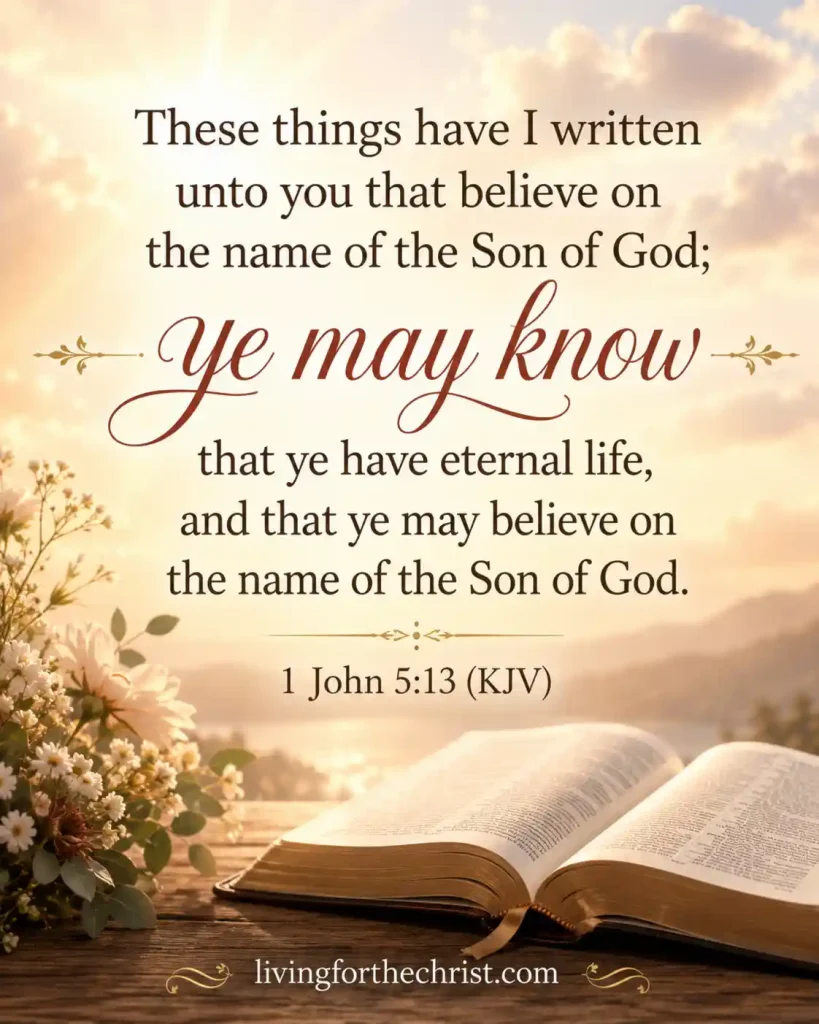
“I write these things to you who believe in the name of the Son of God, that you may know that you have eternal life.”
1 John 5:13
God does not want His children to live in constant uncertainty. He has given us His Word so that those who truly belong to Christ can have assurance.
If you are still learning the basic message of Christianity, begin with What Is the Gospel?
Salvation Begins With What Jesus Has Done
Before looking at the evidence of salvation in your life, we must begin with the foundation.
Your salvation does not rest on how strongly you feel, how well you performed this week, or how perfectly you obeyed.
It rests on Jesus Christ.
Every person has sinned and fallen short of God’s glory. Sin separates us from a holy God, and no amount of good behavior can remove our guilt.
But God sent His Son to do what we could never do for ourselves.
Jesus lived a sinless life, died in the place of sinners, and rose from the dead. He took the punishment we deserved so that everyone who believes in Him can be forgiven and reconciled to God.
“Christ died for our sins… He was buried… He was raised on the third day.”
1 Corinthians 15:3-4
Salvation is not a reward for good people. It is a gift of grace given to sinners who trust in Christ.
“By grace you have been saved through faith… not a result of works.”
Ephesians 2:8-9
Your confidence must not be in the strength of your faith, but in the strength of the Savior you are trusting.
For a deeper explanation of the cross, read Why Did Jesus Have to Die?
What Does It Mean to Believe in Jesus?
Many people say they believe in Jesus. But the Bible shows that saving faith is more than believing that Jesus existed.
James 2:19 says that even the demons believe God exists. They know certain facts about God, but they do not love, trust, or follow Him.
Saving faith means placing your trust in Jesus.
It means you are no longer relying on:
- Your good works
- Church attendance
- Baptism
- Religious rituals
- A prayer you repeated
- Your family’s faith
- Your ability to keep God’s law
Instead, you are relying on Jesus alone.
“Believe in the Lord Jesus, and you will be saved.”
Acts 16:31
True faith receives Christ as both Savior and Lord. You come to Him knowing that you cannot save yourself.
This does not mean you understand every doctrine perfectly when you are saved. It means you recognize your need and place your hope in the One who can rescue you.
Salvation Is Not Based on Your Feelings
One of the most common reasons Christians doubt their salvation is that their feelings change.
One day you may feel close to God. Another day you may feel spiritually dry. You may feel joyful during worship but discouraged the next morning.
Feelings are real, but they are not always reliable.
Your salvation does not disappear when you feel weak.
A child does not stop being part of a family because the child feels distant from a parent. In the same way, a believer’s relationship with God is based on God’s promise, not an emotional experience.
Jesus said:
“Whoever hears My word and believes Him who sent Me has eternal life.”
John 5:24
Notice the promise. Jesus does not say that the believer might receive eternal life if they feel spiritual enough. He says the believer has eternal life.
When feelings create doubt, return to the truth of God’s Word.
Ask yourself:
Am I trusting in my feelings, or am I trusting in Christ?
🎬 Watch: How Can You Know You Are Truly Saved?
If you have ever struggled with doubts about your salvation, this video offers additional biblical teaching to help you examine where your confidence rests. Remember that true assurance is not found in perfect feelings or perfect performance, but in Jesus Christ and the promises of God’s Word.
1. You Have Trusted in Jesus Christ Alone
The first and most important question is not, “Have I become a better person?”
The first question is:
What am I trusting to make me right with God?
A saved person understands that Jesus is the only Savior.
“If you confess with your mouth that Jesus is Lord and believe in your heart that God raised Him from the dead, you will be saved.”
Romans 10:9
Saving faith believes the gospel and rests in Christ’s completed work.
You may not remember the exact date or moment when you first believed. Some people experience a dramatic conversion. Others come to understand the gospel gradually.
The important question is not whether you remember a date.
The question is whether you are trusting Christ now.
2. Your Relationship With Sin Has Changed
A genuine Christian can still struggle with sin.
The apostle John wrote:
“If we say we have no sin, we deceive ourselves.”
1 John 1:8
Salvation does not immediately remove every sinful desire or habit. Christians still experience temptation and must learn to walk by the Spirit.
However, salvation changes our relationship with sin.
Before salvation, a person may excuse sin, love it, defend it, or feel little concern about disobeying God.
After salvation, sin begins to grieve the heart.
A believer may fall, but they cannot remain comfortable indefinitely while living against God. The Holy Spirit convicts them and draws them back toward repentance.
This does not mean every believer responds to conviction immediately. Christians can resist God, become spiritually dull, or experience seasons of serious disobedience.
But God does not abandon His children in their sin. He disciplines, corrects, and restores them.
“The Lord disciplines the one He loves.”
Hebrews 12:6
Ask yourself:
- Does my sin concern me?
- Do I want God to change me?
- When I fall, do I make excuses or turn back to Christ?
- Do I desire freedom from sin, even when the struggle is difficult?
The presence of a battle does not necessarily mean you are unsaved. In many cases, the battle exists because the Holy Spirit has given you new desires.
You can learn more in Romans 7 Bible Study: The Struggle Within and What Is Sin According to the Bible?
3. You Have Experienced Repentance
Repentance is not simply feeling guilty or being afraid of punishment.
Biblical repentance is a change of heart that turns away from sin and toward God.
“Repent therefore, and turn back, that your sins may be blotted out.”
Acts 3:19
Repentance and faith belong together.
When you truly see who Jesus is, you no longer want to remain the ruler of your own life. You come to Him with open hands and surrender.
This does not mean you will never stumble again. Repentance is not a promise that you will become perfect overnight.
It means your direction has changed.
Imagine someone walking away from God. Repentance is turning around and beginning to move toward Him. The person may stumble along the way, but they are no longer willingly walking in the opposite direction.
True repentance is also something God works within us. We do not change our hearts through human effort alone.
For a fuller explanation, read How Do I Repent According to the Bible?
4. You Have Been Born Again
Jesus told Nicodemus:
“Unless one is born again he cannot see the kingdom of God.”
John 3:3
Being born again is not becoming more religious. Nicodemus was already religious, educated, and respected. Yet Jesus told him that he needed new spiritual life.
Salvation is not merely adding Jesus to your existing life.
God gives you a new heart, a new identity, and new desires.
“If anyone is in Christ, he is a new creation.”
2 Corinthians 5:17
This transformation may happen quickly in some areas and slowly in others. You may look back and recognize that God has changed certain attitudes, desires, relationships, or priorities.
You may notice:
- A new hunger for God’s Word
- A desire to pray
- Conviction about sin
- Love for other believers
- A desire to obey God
- Growing concern for people who do not know Christ
- A new understanding of the gospel
These changes do not make you saved. They happen because God has given you new life.
Read What Does It Mean to Be Born Again? for a deeper study of John 3.
5. The Holy Spirit Is Working in Your Life
Every true believer receives the Holy Spirit.
“In Him you also, when you heard the word of truth, the gospel of your salvation, and believed in Him, were sealed with the promised Holy Spirit.”
Ephesians 1:13
The Holy Spirit does not merely give someone an emotional experience. He begins the lifelong work of making the believer more like Jesus.
His work includes:
- Convicting us of sin
- Helping us understand Scripture
- Producing spiritual fruit
- Giving us strength to resist temptation
- Leading us toward obedience
- Comforting us during suffering
- Reminding us that we belong to God
Romans 8:16 says that the Spirit bears witness with our spirit that we are God’s children.
The Spirit’s work may not always feel dramatic. Often, His work appears in quiet but meaningful ways.
You forgive when you once would have remained bitter. You confess a lie instead of hiding it. You begin caring about what honors God. You feel convicted when your words hurt someone. You find yourself wanting to pray when life becomes difficult.
These are signs of God working within you.
To learn more, read The Role of the Holy Spirit in Sanctification
6. Spiritual Fruit Is Beginning to Grow
Galatians 5:22-23 describes the fruit of the Spirit:
- Love
- Joy
- Peace
- Patience
- Kindness
- Goodness
- Faithfulness
- Gentleness
- Self-control
This fruit does not appear in complete maturity the moment someone is saved.
Fruit grows.
A young tree may produce only a small amount at first, but if the tree is alive and healthy, growth should gradually become visible.
In the same way, Christians grow at different rates. Some areas of your life may change quickly. Other areas may require years of prayer, correction, and spiritual growth.
Do not ask only, “Have I arrived?”
Ask, “Is God changing me?”
You may still struggle with impatience, but are you becoming more aware of it? Do you confess it more quickly? Are you learning to respond differently?
You may still experience fear, but are you learning to bring that fear to God?
You may still be tempted to hold grudges, but is God teaching you to forgive?
Growth may be slow, but genuine spiritual life produces fruit.
7. You Desire to Obey Jesus
Jesus said:
“If you love Me, you will keep My commandments.”
John 14:15
Obedience does not purchase salvation. It flows from love for Christ.
A person who has been saved begins to care about what Jesus says.
This does not mean believers obey perfectly. Peter loved Jesus, yet he denied Him three times. The disciples repeatedly misunderstood, feared, and failed.
But after falling, Peter was restored. His failure was not the end of his story.
A true believer may disobey, but they cannot permanently make peace with rejecting Christ’s authority.
There is a difference between:
- Struggling with obedience
- Having no desire to obey at all
A Christian may honestly say, “Lord, I want to obey You, but I am weak. Please help me.”
That cry itself reveals a heart that recognizes Jesus as Lord.
For practical guidance, read What It Means to Follow Jesus Daily
8. You Love Other Believers
One of the signs emphasized throughout 1 John is love for God’s people.
“We know that we have passed out of death into life, because we love the brothers.”
1 John 3:14
Christians will not always agree. Churches contain imperfect people, and believers can hurt one another.
But God places a new love within His children for others who belong to Christ.
This love may show itself through:
- Praying for other believers
- Forgiving those who hurt you
- Encouraging someone who is struggling
- Serving people without seeking recognition
- Wanting to worship and study Scripture with others
- Caring about unity and truth within the church
Loving believers does not mean ignoring sin or avoiding difficult conversations. Biblical love includes truth, patience, forgiveness, and humility.
9. Your Faith Produces Works
The Bible clearly teaches that good works cannot save us.
But the Bible also teaches that saving faith produces good works.
James wrote:
“Faith by itself, if it does not have works, is dead.”
James 2:17
Paul and James do not contradict each other.
Paul explains that works are not the root of salvation. James explains that works are part of the fruit of salvation.
We are not saved because we obey.
We begin to obey because God has saved and transformed us.
Good works may include:
- Caring for someone in need
- Forgiving an enemy
- Speaking truthfully
- Turning away from gossip
- Showing patience to your family
- Giving generously
- Serving others
- Sharing the gospel
- Choosing integrity when no one is watching
These actions do not make God owe us salvation. They reveal that our faith is alive.
Read Faith Without Works Is Dead for a deeper explanation of James 2.
10. You Continue Looking to Christ
Jesus described His people as sheep who hear His voice and follow Him.
“My sheep hear My voice, and I know them, and they follow Me.”
John 10:27
True believers may wander, stumble, and become discouraged. But God continues drawing them back to Christ.
Their faith may feel weak at times, but they do not permanently abandon Jesus.
They may question, wrestle, and experience seasons of doubt. Yet underneath those struggles remains a dependence on Christ.
The assurance in John 10 is not only that Christ’s sheep follow Him. It is also that Jesus knows them and holds them securely.
“No one will snatch them out of My hand.”
John 10:28
Our hope is not that we can hold onto Jesus perfectly.
Our hope is that Jesus holds onto His people.
Christians interpret some of the Bible’s warning passages differently, but Scripture repeatedly gives believers strong assurance that Christ knows, protects, and keeps those who genuinely belong to Him. At the same time, believers are called to continue trusting and faithfully following Him.
For a fuller discussion, read Can a Christian Lose Their Salvation?
What Does Not Automatically Prove You Are Saved?
Several religious experiences can be meaningful, but none of them automatically proves salvation.
Repeating a Prayer
A salvation prayer does not save by itself. We are saved through faith in Christ.
Someone can repeat the correct words without understanding or believing them. Another person may genuinely call upon Christ without remembering every word they prayed.
The important matter is not the wording of the prayer. It is the condition of the heart and the Savior in whom you are trusting.
Being Baptized
Baptism is an important act of obedience and a public declaration of faith, but it does not earn salvation or replace personal faith in Jesus Christ.
Baptism points to the believer’s union with Christ, the washing away of sin through His sacrifice, and the new life we receive through Him. The water itself does not make someone right with God.
The thief on the cross was promised paradise after turning to Jesus in faith, and no baptism is described in the account.
Growing Up in Church
Christian parents cannot pass salvation to their children.
You may know Bible stories, attend services, sing worship songs, and still need to be born again.
Nicodemus was deeply religious, yet Jesus told him, “You must be born again.”
Doing Good Things
Kindness, generosity, and morality are valuable, but they cannot erase sin.
If good works could save us, Jesus would not have needed to die.
Having an Emotional Experience
Tears, peace, excitement, or powerful feelings may accompany conversion, but they do not prove it.
Some people experience strong emotions without true repentance. Others come to Christ quietly without a dramatic moment.
Knowing Correct Doctrine
It is possible to know facts about Jesus without personally trusting Him.
Salvation is not simply knowing information. It is knowing Christ.
Can a Saved Person Still Struggle With Sin?
Yes.
Christians still live in fallen bodies and face temptation. Galatians 5 describes an ongoing conflict between the desires of the flesh and the Spirit.
However, there is an important difference between struggling against sin and surrendering to it without repentance.
A believer may fall into sin and feel:
- Conviction
- Grief
- A desire to confess
- A desire to change
- A longing to return to fellowship with God
Someone living in false assurance may repeatedly excuse sin, celebrate it, or insist that God’s commands do not matter.
The question is not whether you have ever fallen.
The question is what direction your heart is moving.
When you sin, do you run away from God and remain there, or do you eventually run back to Him?
First John 1:9 gives believers this promise:
“If we confess our sins, He is faithful and just to forgive us.”
Confession does not save us again each time we fail. It restores closeness and fellowship with the Father who has already received us through Christ.
Conviction Is Different From Condemnation
Some sincere Christians mistake spiritual conviction for proof that they are unsaved.
Conviction is the Holy Spirit showing you a specific sin and leading you toward confession, forgiveness, and change.
Condemnation speaks as though there is no hope.
Conviction says:
“That action was sinful. Bring it to God.”
Condemnation says:
“You are hopeless. God will never receive you.”
Romans 8:1 says:
“There is therefore now no condemnation for those who are in Christ Jesus.”
The Holy Spirit does not excuse sin, but He leads believers back to the grace found in Christ.
Revelation 12:10 describes Satan as the accuser of God’s people. The enemy uses accusation to make us hide from God and believe there is no hope.
The Spirit uses conviction to bring us into the light and draw us back to the Father.
What About Someone Who Claims to Believe but Never Changes?
Jesus warned that not everyone who calls Him “Lord” truly belongs to Him.
This is why Scripture tells us to examine ourselves.
“Examine yourselves, to see whether you are in the faith.”
2 Corinthians 13:5
Self-examination is not about endlessly searching for enough goodness to earn assurance.
It means honestly asking:
- Am I trusting in Jesus or in myself?
- Have I turned toward Christ?
- Do I care about my sin?
- Is there evidence of the Holy Spirit’s work?
- Do I desire to follow Jesus?
- Is my faith producing any fruit?
A person can profess Christianity outwardly while remaining unchanged inwardly.
But we must also be careful not to expect instant maturity from a new believer. Growth takes time. Some Christians carry deep wounds, poor teaching, strong habits, or little support.
The issue is not whether the fruit is impressive.
The issue is whether spiritual life is present.
What Should I Do If I Am Not Sure I Am Saved?
Do not try to create assurance by repeating a prayer hundreds of times or examining every emotion you have ever experienced.
Look to Jesus.
Read the gospel and ask yourself what you believe about Him.
Do you believe that Jesus is the Son of God?
Do you believe He died for sinners and rose from the dead?
Do you recognize that you cannot save yourself?
Are you willing to turn from sin and place your life in His hands?
Jesus said:
“Whoever comes to Me I will never cast out.”
John 6:37
Come to Him honestly.
You do not need impressive words. You can tell Him:
“Lord Jesus, I know that I have sinned and cannot save myself. I believe You died for sinners and rose again. I am placing my trust in You. Forgive me, change my heart, and help me follow You.”
A prayer does not save because the words are powerful.
Jesus saves.
“Everyone who calls on the name of the Lord will be saved.”
Romans 10:13
How Can a Christian Grow in Assurance?
Assurance often becomes stronger as we grow in our knowledge of Christ and see His work within us.
Stay in God’s Word
The more you know God’s promises, the less you will be controlled by changing feelings.
Read the Gospel of John and the book of 1 John. Both books speak clearly about believing in Jesus, eternal life, spiritual fruit, and assurance.
Pray Honestly
Tell God about your doubts. He is not threatened by sincere questions.
Ask Him to help you understand the gospel and rest in His promises.
Confess Known Sin
Unconfessed sin can damage our fellowship with God and weaken our sense of assurance.
Bring sin into the light. Receive God’s forgiveness and ask for strength to walk differently.
Remain Connected to Other Believers
Isolation often makes doubt stronger.
A mature Christian, pastor, or trusted church leader can pray with you, help you understand Scripture, and remind you of the gospel.
Look for Growth, Not Perfection
Do not compare yourself to someone who has followed Christ for decades.
Look at the direction of your own life. Notice the ways God has changed your desires, corrected your thinking, and taught you to depend on Him.
Keep Your Eyes on Christ
Your greatest assurance is not found by constantly looking inward.
It is found by looking to Jesus.
Your obedience may be imperfect. Your emotions may change. Your faith may sometimes feel weak.
But Jesus is a perfect Savior.
Signs of Salvation vs. False Assurance
| True Salvation | False Assurance |
|---|---|
| Trusts in Jesus Christ alone | Trusts in personal goodness or religion |
| Recognizes and confesses sin | Excuses or defends ongoing sin |
| Desires to follow Jesus | Wants salvation without surrender |
| Produces growing spiritual fruit | Shows no lasting heart change |
| Loves God’s truth | Rejects Scripture when it confronts sin |
| Returns to God after falling | Remains comfortable living apart from God |
| Depends on grace | Depends on religious performance |
| Leads to humility | Produces pride or self-righteousness |
This comparison is not meant to make tenderhearted Christians panic.
A person concerned about grieving God, longing to be close to Christ, and fighting against sin is in a very different condition from someone who does not care about God at all.
Questions for Personal Reflection
Take time to answer these questions honestly before God:
- What am I trusting to save me?
- Do I believe that Jesus died for my sins and rose again?
- Have I turned toward Christ in faith and repentance?
- Has my relationship with sin changed?
- Do I experience conviction when I disobey God?
- Is there any evidence of spiritual growth in my life?
- Do I desire to know, love, and follow Jesus?
- Am I resting in Christ’s work or constantly trying to earn God’s acceptance?
- When I fall, do I return to God?
- Is Jesus my only hope?
These questions are not a test you must pass with a perfect score.
They are meant to help you see whether your faith is resting in Christ and whether His life is being revealed within you.
A Prayer for Assurance
Father,
Thank You for sending Jesus Christ to save sinners.
I know that I cannot make myself righteous or earn eternal life through my own works. Help me place my full trust in what Jesus accomplished through His death and resurrection.
Please search my heart and reveal anything I am trusting besides Christ. Give me true repentance, genuine faith, and a heart that desires to follow You.
When I struggle with doubt, lead me back to Your promises. When I sin, help me confess it and return to You. Continue producing the fruit of Your Spirit in my life.
Thank You that salvation belongs to You and that Jesus is a complete and perfect Savior.
In Jesus’ name,
Amen.
Frequently Asked Questions
Can I Know for Certain That I Am Saved?
Yes. First John 5:13 says that believers can know they have eternal life. Assurance rests on God’s promises, Christ’s completed work, and the evidence of the Holy Spirit’s work within the believer.
Does Doubting My Salvation Mean I Am Not Saved?
No. Genuine Christians can experience doubt, especially during temptation, grief, spiritual dryness, or after falling into sin. Bring those doubts to God and examine them through Scripture rather than relying on feelings.
Do I Have to Remember the Exact Day I Was Saved?
No. Some people remember a specific conversion moment, while others came to understand and trust the gospel gradually. The central question is whether you are trusting in Christ now.
Can I Be Saved If I Still Struggle With Sin?
Yes. Every Christian continues to struggle with sin. The evidence of salvation is not the absence of temptation, but a changed relationship with sin and the Holy Spirit’s ongoing work of repentance and transformation.
Are Good Works Required for Salvation?
Good works do not earn salvation. We are saved by grace through faith. However, genuine faith produces obedience and spiritual fruit. Works are evidence of salvation, not the cause of it.
Does Baptism Save Me?
Baptism is an important act of obedience and a public expression of faith, but it does not earn salvation or replace personal faith in Jesus Christ. Baptism points to the cleansing and new life believers receive through Christ.
What If I Keep Asking Jesus to Save Me?
You do not need to repeat a prayer until you feel that you have finally said it correctly. Place your trust in Christ and take God at His Word. Jesus promised that He would never reject the person who comes to Him.
Can a True Christian Lose Their Salvation?
Scripture gives believers strong assurance that Christ knows, protects, and keeps those who genuinely belong to Him. Christians interpret some warning passages differently, but all believers are called to rest in Christ, continue in faith, and follow Him faithfully.
Final Thoughts
Knowing you are saved does not mean believing you are perfect.
It means knowing that Jesus is enough.
Your assurance is not built on never failing. It is built on the Savior who died for you, rose again, and promises eternal life to everyone who truly believes.
At the same time, salvation is more than repeating words or adopting a Christian label.
When God saves someone, He gives new life.
That new life produces repentance, spiritual hunger, conviction, love, obedience, and growing fruit. These things may appear slowly and imperfectly, but they point to the presence of the Holy Spirit.
So examine yourself honestly, but do not remain trapped in endless self-examination.
Look to Christ.
Trust His promises.
Rest in His finished work.
And remember:
“Whoever has the Son has life.”
1 John 5:12