
Can Women Be Pastors? What Does the Bible Actually Say?
Can women be pastors?
This has become one of the most debated questions in the modern church.
Some churches ordain women as pastors, elders, and bishops. Other churches believe Scripture reserves the office of pastor or elder for qualified men while still affirming the many important ministries God gives women.
So which position is biblical?
As Christians, our answer should not ultimately come from culture, church tradition, personal experience, or what seems most acceptable to us.
Our first question should always be:
What does the Bible actually say?
That is the approach we try to take throughout our Bible Questions studies here at Living for the Christ. Even when a subject is difficult or controversial, God’s Word – not changing culture – must be our final authority.
After looking carefully at the major passages together, I believe the clearest reading of Scripture is that the governing and authoritative teaching office of elder/pastor/overseer in the local church is entrusted to qualified men.
But we need to immediately clarify what that does – and does not – mean.
It does not mean:
- Women are less valuable.
- Women are less intelligent.
- Women cannot understand theology.
- Women cannot communicate biblical truth.
- Women cannot evangelize.
- Women cannot disciple others.
- Women cannot have important ministries.
- God does not powerfully use women.
Scripture itself proves otherwise.
Throughout the Bible, God uses women to pray, prophesy, evangelize, disciple, serve, teach, support ministry, show hospitality, demonstrate tremendous courage, and advance His purposes.
So the real question is not:
“Can women minister?”
Clearly, they can.
The narrower question is:
“Does Scripture give women the office of elder or pastor responsible for governing and authoritatively teaching the local church?”
Let’s walk through what the Bible says.
The Quick Answer: Can Women Be Pastors?
I believe the New Testament teaches that qualified men are to serve as elders or pastors responsible for the spiritual oversight and authoritative teaching of the local church.
The strongest passages are:
- 1 Timothy 2:11-15
- 1 Timothy 3:1-7
- Titus 1:5-9
- Acts 20:17-28
- 1 Peter 5:1-4
At the same time, Scripture clearly shows women participating in significant ministry.
Women:
- Prayed
- Prophesied
- Shared the gospel
- Helped teach biblical truth
- Supported missionaries
- Served local churches
- Discipled other believers
- Opened their homes for ministry
- Helped advance the gospel
So this is not a question of men being more important than women.
It is a question about whether God has assigned different responsibilities within His church.
Pastor, Elder, and Overseer – Are They the Same Office?
Before discussing women pastors, it helps to understand what the New Testament means by church leadership.
Several terms are used:
Elder emphasizes spiritual maturity and leadership.
Overseer emphasizes responsibility and oversight.
Pastor or shepherd emphasizes caring for and feeding God’s people.
The New Testament appears to use these terms to describe overlapping aspects of the same basic local church leadership office.
Acts 20 gives us an important example.
Paul calls the elders of the church at Ephesus to meet him in Acts 20:17.
Later, while speaking to these same leaders, he tells them that the Holy Spirit has made them overseers and instructs them to shepherd God’s church in Acts 20:28.
Peter uses similar language in 1 Peter 5:1-3 when he addresses elders and tells them to shepherd God’s flock while exercising oversight.
This is important because sometimes people argue:
“The Bible may restrict women from being elders, but it doesn’t say they can’t be pastors.”
Biblically, however, pastor, elder, and overseer are closely connected.
Modern churches may use the title pastor for many different staff positions, but when discussing the biblical office responsible for shepherding, governing, and doctrinally overseeing the congregation, these terms overlap significantly.
1 Timothy 2:11-15 – Teaching and Authority
One of the central passages in this discussion is 1 Timothy 2.
Paul writes that he does not permit a woman “to teach or to assume authority over a man” (1 Timothy 2:12).
This passage has generated considerable disagreement.
Christians who support female pastors sometimes argue that Paul was addressing a temporary situation in Ephesus involving false teaching, disorder, or women who had not yet been properly instructed.
Complementarian Christians understand Paul’s command as applying more broadly to the authoritative teaching and governing responsibility connected with leadership in the local church.
One reason I find the second interpretation more convincing is the reason Paul himself gives.
Paul points back to Adam and Eve:
“For Adam was formed first, then Eve.”
- 1 Timothy 2:13
Paul does not merely appeal to Roman customs.
He does not say:
“Women cannot teach because Ephesian culture doesn’t allow it.”
Instead, he reaches back to creation.
That matters.
His argument appears to be rooted in something that existed before the fall and long before first-century Ephesian culture.
Immediately after this discussion, Paul begins explaining the qualifications for overseers in 1 Timothy 3.
That connection is one reason I believe 1 Timothy 2 is one of the strongest passages supporting male eldership.
However, we should also be careful not to make this passage say more than it says.
Paul does not say women are incapable of teaching.
He does not say women cannot understand theology.
He does not say women cannot communicate biblical truth to men under any imaginable circumstance.
The rest of the New Testament shows that women did communicate spiritual truth in various settings.
The question concerns teaching combined with authority within the church’s leadership structure.
What Does “Saved Through Childbearing” Mean?
If we discuss 1 Timothy 2, we should not simply skip over its difficult final verse.
1 Timothy 2:15 says that women will be “saved through childbearing” if they continue in faith, love, holiness, and self-control.
Does this mean having children saves a woman?
Absolutely not.
That would contradict the clear teaching of the gospel.
Scripture repeatedly teaches that salvation is received by God’s grace through faith in Jesus Christ – not through human works.
See:
- Ephesians 2:8-9
- Romans 3:28
- Titus 3:5
- Acts 16:31
Christians have suggested several interpretations of 1 Timothy 2:15.
Some understand Paul to mean preservation through childbirth.
Others believe the passage ultimately points toward the birth of Christ, through whom salvation entered the world.
Still others believe Paul is speaking about women faithfully embracing their God-given responsibilities rather than attempting to overturn God’s created order.
This is one of those passages where faithful Bible interpreters differ.
We should be humble enough to admit that.
What we can say confidently is:
Paul cannot be teaching that women earn salvation by having children.
Salvation comes through Christ alone.
If you’re unsure about what Scripture teaches concerning salvation itself, I recommend reading How to Know If You Are Saved: Biblical Signs of True Salvation.
1 Timothy 3 – Who May Be an Overseer?
Immediately after Paul’s discussion of teaching and authority, he gives qualifications for an overseer.
According to 1 Timothy 3:1-7, an overseer must demonstrate qualities such as:
- Being above reproach
- Faithfulness in marriage
- Self-control
- Respectability
- Hospitality
- Ability to teach
- Gentleness
- Freedom from the love of money
- Good leadership within his household
- Spiritual maturity
- A good reputation
Pastoral ministry is therefore about far more than standing behind a pulpit.
The pastor or elder must be a man whose character supports the message he teaches.
One familiar qualification is translated “husband of one wife” or “faithful to his wife.”
We should be careful about building the entire argument for male eldership on that phrase alone.
The phrase may emphasize marital faithfulness – that an elder must be a “one-woman man.”
The stronger case comes from considering the passage together with 1 Timothy 2, Titus 1, and the wider pattern of New Testament leadership.
Taken together, I believe those passages indicate that the office of elder or overseer is entrusted to qualified men.
Being a Man Does Not Automatically Qualify Someone to Be a Pastor
This point is extremely important.
The Bible does not simply teach:
“Men can be pastors and women can’t.”
It teaches that qualified men may serve as elders.
There is a huge difference.
Being male does not automatically qualify someone for pastoral ministry.
A man might be:
- Charismatic
- Intelligent
- Popular
- Successful
- Highly educated
- An excellent public speaker
and still be completely unqualified to shepherd God’s people.
His character matters.
His doctrine matters.
His spiritual maturity matters.
His family life matters.
His ability to teach matters.
His reputation matters.
His faithfulness matters.
James 3:1 even warns that teachers will be judged more strictly.
Pastoral leadership is not a trophy God gives to men.
It is an enormous responsibility for which pastors will answer to Christ.
Titus 1 Gives Similar Qualifications
Paul gives Titus similar instructions in Titus 1:5-9.
An elder must be spiritually mature, self-controlled, hospitable, upright, disciplined, faithful in family life, and firmly committed to sound doctrine.
He must also be able to encourage believers through sound teaching and confront those who contradict the truth.
This shows us that elders do more than manage church programs.
They have a doctrinal responsibility.
They are responsible for:
- Teaching truth
- Guarding the flock
- Correcting false doctrine
- Providing spiritual leadership
- Modeling godly character
That responsibility helps explain why the question of who may serve as an elder matters.
Jesus Is the Chief Shepherd
There is another truth we cannot forget.
No human pastor is the true head of the church.
Jesus is.
Peter calls Jesus the Chief Shepherd in 1 Peter 5:4.
Every earthly pastor is therefore an under-shepherd serving beneath Christ.
The church does not ultimately belong to:
- The pastor
- The elders
- A denomination
- A board
- A ministry organization
The church belongs to Jesus Christ.
He purchased His people with His blood.
Hebrews 13:17 also reminds us that spiritual leaders watch over souls as those who will give an account.
That should produce humility in every pastor.
Biblical leadership is not about gaining status.
It is about faithfully caring for people who belong to Christ.
Does This Mean Women Cannot Teach?
No.
This is one of the most important distinctions in the entire discussion.
Scripture clearly shows women communicating biblical truth.
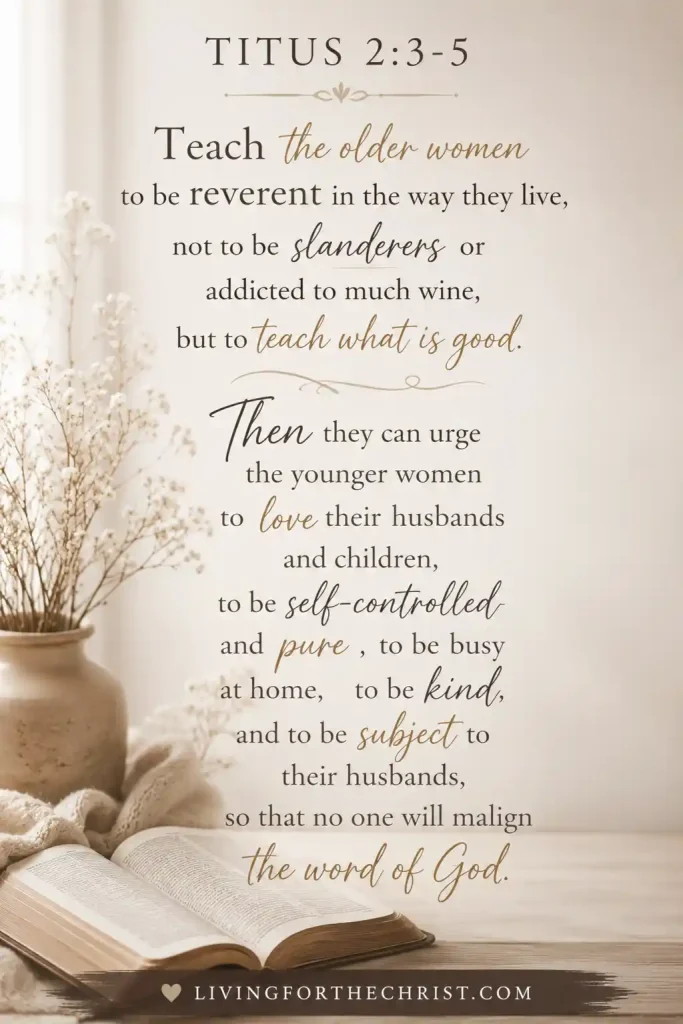
Titus 2:3-5 specifically commands older women to teach younger women.
Women can:
- Disciple other women
- Teach children
- Share the gospel
- Explain Scripture
- Encourage believers
- Counsel from Scripture
- Write Bible studies
- Write Christian books
- Participate in missions
- Share testimonies
- Defend biblical truth
- Serve throughout the church
The complementarian understanding is not:
“Women cannot teach anything.”
The restriction concerns the authoritative teaching and governing responsibility belonging to the pastoral or elder office.
Can Women Teach a Mixed Bible Study?
This is where Christians who agree on male eldership may still disagree.
Some complementarians understand 1 Timothy 2:12 primarily as a restriction concerning the authoritative teaching connected with the elder office and the gathered congregation.
Under that understanding, a woman might participate in a mixed Bible study, theological discussion, conference panel, classroom, or similar setting without functioning as the congregation’s pastor or elder.
Other complementarians understand Paul’s restriction more broadly and believe women should not provide regular biblical instruction to adult men in church-related settings.
Scripture does not give us a modern organizational chart explaining:
- Sunday school
- Small groups
- Podcasts
- Bible conferences
- Seminaries
- Online ministries
- Christian publishing
- Church staff titles
That means Christians sometimes have to determine how biblical principles apply to modern situations.
We should therefore distinguish between:
what Scripture explicitly teaches
and
how believers apply that teaching in circumstances Scripture does not directly describe.
Christians can agree that eldership is male while still drawing some practical boundaries differently.
Priscilla Helped Teach Apollos
Acts 18 gives us an important example.
Apollos was an eloquent preacher with considerable knowledge of Scripture, but his understanding needed correction.
Acts 18:26 tells us that Priscilla and Aquila took him aside and explained God’s way more accurately.
Notice that Priscilla participated.
This demonstrates that Scripture does not present women as incapable of discussing theology with men or explaining biblical truth to them in every circumstance.
At the same time, Acts 18 never identifies Priscilla as the governing elder or overseer of a congregation.
Her example therefore fits naturally with the distinction between:
communicating biblical truth
and
holding the pastoral office of the local church.
What About Phoebe?
Romans 16:1 introduces us to Phoebe.
Paul calls her a diakonos of the church at Cenchreae.
That Greek word can refer generally to a servant or minister, but it can also be associated with the recognized role of deacon.
Because of that, Christians disagree about whether Phoebe officially held the office of deacon.
Some complementarian churches allow women to serve as deacons because they understand the deacon’s role as service rather than governing and authoritative teaching.
Other churches believe the office of deacon should also be restricted to qualified men.
Still others understand Paul’s description simply to mean that Phoebe was an exceptionally faithful servant of the church.
Whatever conclusion we reach about her precise title, one thing is obvious:
Paul valued Phoebe and her ministry.
Women were not irrelevant to the early church.
They were deeply involved in its work.
What About Junia in Romans 16:7?
Romans 16:7 mentions Andronicus and Junia.
Junia was most likely a woman, and the passage has become important in discussions about female church leadership.
Some translations describe Andronicus and Junia as “outstanding among the apostles.”
There are two important questions.
First, does Paul mean they were well known to the apostles, or were they themselves prominent among the apostles?
Interpreters disagree.
Second, the New Testament can use apostle in more than one sense.
Sometimes it refers to Christ’s uniquely commissioned apostles.
In broader usage, it can carry the idea of someone being sent out as a messenger or representative.
Therefore, Romans 16:7 should not be treated as an easy proof-text for either side.
Even if Junia were called an apostle in a broader missionary sense, Romans 16 does not identify her as an elder or overseer governing a local congregation.
It is better to allow the passage to say what it says rather than forcing it to settle a question it does not directly address.
What About Deborah?
Deborah is another woman frequently mentioned when discussing female pastors.
Judges 4-5 describes Deborah as both a prophetess and a judge of Israel.
God clearly used her powerfully.
Her story immediately shows that Scripture does not portray women as incapable of wisdom, courage, leadership, or spiritual influence.
But we also need to recognize the biblical context.
Deborah lived during the Old Testament period.
The New Testament local church had not yet been established.
A judge of Israel and an elder of a New Testament congregation are not the same office.
Therefore, Deborah’s story demonstrates that God can powerfully use women in leadership and ministry, but it does not by itself determine the qualifications for pastors or elders in New Testament churches.
For that question, we should primarily examine the passages that specifically discuss church leadership.
Women Prophesied in the New Testament
Women were also involved in prophecy.
Acts 21:9 tells us that Philip had four unmarried daughters who prophesied.
At Pentecost, Peter quoted Joel’s prophecy that both sons and daughters would prophesy (Acts 2:17).
Paul also refers to women praying and prophesying in 1 Corinthians 11:5.
Whatever conclusions we reach about the exact nature of New Testament prophecy, these passages demonstrate something important:
Women were active participants in the life and ministry of the early church.
The New Testament does not portray Christian women as people who simply sat in the background and contributed nothing.
What About “Women Should Remain Silent” in 1 Corinthians 14?
1 Corinthians 14:34-35 is another difficult passage.
Paul tells women to remain silent in the churches.
If we isolated those verses, we might assume Paul meant that a woman could never speak during a Christian gathering.
But earlier in the same letter, Paul refers to women praying and prophesying in 1 Corinthians 11:5.
So “silence” cannot mean that women were universally forbidden from uttering any words in every church setting.
We also need to examine the broader context of 1 Corinthians 14.
Paul is dealing with orderly worship.
He tells a person speaking in tongues to remain silent if no interpreter is present (1 Corinthians 14:28).
He also tells a prophet to stop speaking when another receives a revelation (1 Corinthians 14:30).
So the chapter contains several situational commands involving silence.
Christians disagree about exactly what type of speech Paul was restricting for women in verses 34-35.
Some believe it concerned the authoritative evaluation of prophecy.
Others believe disorderly questioning was taking place.
There are other interpretations as well.
Because the passage is difficult, I would not make 1 Corinthians 14 the foundation of the argument against female pastors.
The clearer passages dealing specifically with leadership are 1 Timothy 2-3 and Titus 1.
Didn’t Jesus Treat Women Differently From the Culture Around Him?
Jesus consistently treated women with dignity.
Consider just a few examples.
Jesus openly spoke with the Samaritan woman in John 4.
Women traveled with Jesus and supported His ministry in Luke 8:1-3.
Mary sat at Jesus’ feet as a disciple in Luke 10:38-42.
Women remained near the cross.
Women discovered the empty tomb.
Mary Magdalene became one of the first people to encounter the resurrected Jesus and was sent to tell the disciples that she had seen the Lord.
Jesus never treated women as spiritually insignificant.
He also chose twelve men as the Twelve apostles.
I believe that provides supporting evidence for a broader biblical pattern of male spiritual leadership.
However, I would not use the twelve male apostles as the primary argument concerning pastoral qualifications.
Jesus choosing twelve men also has connections with the twelve tribes of Israel and salvation history.
The clearer instructions concerning local church elders come from passages such as 1 Timothy 2-3 and Titus 1.
What About Galatians 3:28?
Galatians 3:28 teaches that in Christ there is neither Jew nor Gentile, slave nor free, male nor female, because believers are one in Christ.
This is a beautiful statement about our standing before God.
A man does not receive a greater salvation than a woman.
A man is not more justified.
A woman does not receive a lesser Holy Spirit.
Women are not second-class citizens of God’s kingdom.
Every person who belongs to Christ receives the same Savior and the same inheritance.
But the context of Galatians 3 concerns our relationship to Christ and God’s promise, not qualifications for church leadership.
Therefore, Galatians 3:28 does not necessarily eliminate every distinction of role taught elsewhere in Scripture.
Equal value does not require identical responsibilities.
Can Women Preach the Gospel?
Yes.
Every Christian should be willing to tell others about Jesus.
Women can:
- Explain the gospel
- Share their testimony
- Evangelize unbelievers
- Participate in missions
- Defend the Christian faith
- Disciple new believers
- Tell others about Jesus
Mary Magdalene announced the resurrection to Jesus’ followers.
The Samaritan woman told people in her town about Jesus.
Priscilla helped explain truth to Apollos.
The Great Commission is not a command for male pastors alone.
The disagreement about female pastors concerns something much narrower:
Who should occupy the elder or pastoral office responsible for governing and authoritatively teaching the local congregation?
It should never be twisted into:
“Women shouldn’t tell people about Jesus.”
That would clearly go beyond Scripture.
What About Women Missionaries and Church Planters?
Women have played an enormous role in Christian missions.
Throughout Christian history, faithful women have:
- Shared the gospel
- Translated Scripture
- Taught children
- Discipled women
- Cared for the sick
- Served the poor
- Established ministries
- Opened homes
- Helped new churches
- Carried the gospel into difficult places
Nothing about male eldership diminishes that work.
Being a missionary is also not automatically identical to occupying the office of elder in a local congregation.
A woman may help evangelize an area, disciple new believers, organize ministry, teach women and children, and make enormous contributions to establishing a congregation.
The complementarian concern arises when someone assumes the continuing role of elder responsible for governing and authoritatively teaching the congregation.
Again, the question is not:
“Can God use women powerfully?”
Scripture answers that with an unmistakable yes.
What If a Woman Is a Better Bible Teacher Than the Men Around Her?
She may be.
The Bible never says every Christian man understands Scripture better than every Christian woman.
That obviously isn’t true.
Some women possess extraordinary knowledge of Scripture.
Some women are tremendously gifted communicators.
Priscilla’s interaction with Apollos demonstrates that a spiritually knowledgeable woman could help instruct a gifted male preacher.
But spiritual gifting does not automatically determine church office.
The same is true for men.
A man could be one of the most entertaining speakers in the country and still fail nearly every biblical qualification for eldership.
Pastoral qualifications involve far more than talent.
God determines both:
the gifts He gives
and
the qualifications He establishes for particular offices.
The church should encourage women to develop and use their gifts without assuming that every spiritual gift must lead to every church office.
What If a Woman Says God Called Her to Be a Pastor?
This requires careful thought.
Christians commonly say things like:
“God called me.”
“I feel led to do this.”
“I believe God told me this.”
Personal conviction can feel incredibly powerful.
But every perceived calling must ultimately be tested by Scripture.
God will not contradict His written Word.
Our experiences do not interpret Scripture.
Scripture helps us evaluate our experiences.
This principle applies far beyond the discussion about female pastors.
If you’re struggling with how to distinguish God’s leading from your own desires, circumstances, or feelings, you may also find How Can We Know God’s Will? helpful.
If the complementarian interpretation of the pastoral office is correct, then a personal sense of calling should not override the biblical qualifications for elders.
But that does not mean God has no meaningful calling for women.
A woman may be powerfully used in:
- Evangelism
- Missions
- Discipleship
- Women’s ministry
- Biblical counseling
- Hospitality
- Teaching
- Writing
- Prayer
- Mercy ministry
- Children’s ministry
- Apologetics
- Bible scholarship
- Community outreach
The church should never give women the impression that unless they can become pastors, their ministries somehow matter less.
That is not biblical.
What About Churches With Female Pastors?
Christians who believe women may serve as pastors or elders are commonly described as egalitarians.
They generally understand passages such as 1 Timothy 2 differently, often arguing that Paul’s restrictions addressed particular circumstances within the early church rather than permanently limiting the pastoral office to men.
Christians who believe the pastoral or elder office is reserved for qualified men are generally called complementarians.
Complementarians believe men and women are equally created in God’s image and equally valuable before Him while also believing God has given men and women some distinct responsibilities.
There are sincere Christians who love Jesus and affirm the authority of Scripture who disagree on this question.
That means we should discuss it with humility.
We do not need to insult people.
We do not need to accuse every person on the other side of deliberately rejecting God.
We do not need to question everyone’s salvation.
At the same time, Christian charity does not mean pretending every interpretation is equally persuasive.
After considering the passages together, I believe the complementarian understanding best fits the New Testament evidence.
🎬 Watch: What Does the Bible Say About Women Pastors?
If you’d like another Bible-centered explanation of this question, this short video from Got Questions Ministries examines whether Scripture permits women to serve in the pastoral office and looks at several of the same passages we’ve considered above.
Is This a Salvation Issue?
No.
A person is not saved by having the correct position on female pastors.
We are saved through faith in Jesus Christ.
Someone who believes women can be pastors is not automatically unsaved.
Someone who believes only men should be pastors is not saved because of that belief either.
Our salvation rests in Christ and His finished work.
If you’re wondering what Scripture says about genuine conversion and assurance, read How to Know If You Are Saved: Biblical Signs of True Salvation.
However, saying something is not a salvation issue does not mean it is unimportant.
Church leadership matters.
Sound doctrine matters.
How God’s church is organized matters.
Obedience matters.
We can therefore hold two truths together:
Our position on women pastors does not save us.
And:
Christians should still sincerely seek to understand and obey what Scripture teaches about His church.
Should I Attend a Church With a Female Pastor?
If Scripture teaches that the office of pastor or elder is reserved for qualified men, then I do not believe a Christian should knowingly place themselves under the pastoral authority of a woman serving in that office.
This is not because women are less valuable, less spiritual, or less capable of understanding Scripture.
The issue is simply this:
If God has given specific instructions for how His church should be led, Christians should want to worship in a church that seeks to follow those instructions.
Paul did not leave church leadership completely open-ended.
In 1 Timothy 2-3 and Titus 1, he gives instructions concerning teaching, authority, elders, and overseers. If we conclude from those passages that the pastoral office belongs to qualified men, then attending a church led by a female pastor would mean voluntarily placing ourselves under a church leadership structure we believe is contrary to Scripture.
That should matter to us.
Hebrews 13:17 teaches that believers are to submit to spiritual leaders who watch over their souls.
Because church membership involves placing ourselves under spiritual leadership, we should take seriously who those leaders are and whether the church’s leadership structure follows biblical qualifications.
So if I became convinced that my church’s senior pastor or governing elder was a woman, I would prayerfully begin looking for another biblically faithful church.
That does not mean I would leave angrily.
It does not mean I would insult the pastor.
It does not mean I would question everyone’s salvation.
It does not mean I would create division on the way out.
But I would not ignore what I believe Scripture teaches simply because I liked the church, had friends there, or felt comfortable.
Our loyalty must ultimately be to Christ and His Word.
When looking for another church, I would ask:
- Does this church faithfully preach the biblical gospel?
- Does it treat Scripture as the final authority?
- Are the pastors and elders qualified men according to 1 Timothy 3 and Titus 1?
- Does the church teach sound doctrine?
- Are the leaders accountable and spiritually mature?
- Is Christ – rather than personalities or culture – at the center of the church?
No church will be perfect.
But there is a difference between an imperfect church and a church that has adopted a leadership structure we believe Scripture specifically does not permit.
If we believe God’s Word clearly teaches male eldership, then we should seek a church that honors that teaching.
Conviction should eventually affect where and how we worship.
Jesus is the Head of the church, and our desire should be to belong to a local congregation that seeks to order itself according to His Word.
What About a Woman With the Title “Pastor” Who Isn’t an Elder?
Modern terminology can make this subject confusing.
Some churches use the word pastor for many staff positions:
- Women’s pastor
- Children’s pastor
- Worship pastor
- Care pastor
- Family pastor
- Administrative pastor
Because churches use titles differently, simply seeing the word pastor in someone’s job title does not necessarily tell us what role that person performs.
The better question is:
What authority and responsibility does this person actually have?
For example, a woman called a “women’s ministry pastor” who primarily disciples women under the authority of the church’s elders is functioning differently from someone serving as the senior elder responsible for governing and teaching the entire congregation.
When evaluating modern ministry positions, we should therefore look beyond titles.
Examine the actual responsibility.
Biblical Male Leadership Must Never Be Used to Mistreat Women
This is absolutely essential.
Nothing in Scripture gives men permission to:
- Control women
- Belittle women
- Intimidate women
- Ignore women’s concerns
- Dismiss women’s wisdom
- Treat women as intellectually inferior
- Excuse abusive behavior
- Prevent women from using legitimate spiritual gifts
That is not biblical leadership.
Jesus treated women with dignity.
Paul repeatedly praised women who faithfully served Christ.
Husbands are commanded to love their wives sacrificially, following the example of Christ’s love for the church (Ephesians 5:25).
Peter also specifically warns elders not to lord their authority over God’s people (1 Peter 5:3).
Biblical leadership should look like Christ.
It should be:
- Humble
- Sacrificial
- Holy
- Gentle
- Courageous
- Servant-hearted
A man who uses “biblical authority” as an excuse to dominate others is abusing biblical teaching.
The Church Desperately Needs Faithful Women
Sometimes this discussion becomes so focused on whether women may be pastors that we forget how extensively Scripture celebrates faithful women.
Consider some of the women God used.
Sarah is remembered for faith.
Rahab trusted God and became part of the family line leading to Christ.
Ruth demonstrated extraordinary faithfulness.
Hannah modeled persistent prayer.
Deborah served Israel courageously.
Esther risked her life for her people.
Mary humbly submitted to God’s extraordinary calling.
Elizabeth faithfully served God.
Anna worshiped, fasted, prayed, and spoke about Christ.
Mary Magdalene followed Jesus and witnessed the risen Lord.
Priscilla helped instruct Apollos.
Phoebe faithfully served the church.
Lydia opened her home to gospel ministry.
Lois and Eunice helped shape Timothy’s faith.
The church needs women who know Scripture.
The church needs women who pray.
The church needs women who disciple younger believers.
The church needs women who evangelize.
The church needs women who courageously defend biblical truth.
The church needs women who serve.
The church needs women who teach other women.
The church needs Christian mothers.
The church needs spiritual mentors.
The church needs missionaries.
The church needs counselors.
The church needs writers.
The church needs women willing to quietly serve when nobody is applauding.
A Christian woman does not need the title pastor for her life to have enormous eternal significance.
God measures faithfulness very differently from the world.
Why Different Roles Do Not Mean Different Value
One reason this subject becomes emotionally charged is that our culture frequently connects authority with importance.
The person with the most authority must be the most valuable.
The person with the biggest title must matter most.
But Jesus completely overturns that way of thinking.
Jesus said that whoever wanted to become great among His followers should become a servant (Matthew 20:26).
In God’s kingdom, leadership is not supposed to mean:
“I am better than you.”
It means:
“I have been given a responsibility to serve you.”
A pastor should not look at his congregation and think:
“These people are beneath me.”
He should understand that God has entrusted precious souls to his care.
Male eldership therefore cannot legitimately be used as an argument that men are more valuable.
It actually places a serious responsibility upon qualified men to sacrificially serve God’s people.
How Should Christians Handle Disagreement Over This?
We can hold convictions without becoming cruel.
We can say:
“I believe Scripture teaches male eldership.”
without saying:
“Anyone who disagrees with me doesn’t love Jesus.”
Likewise, Christians who support female pastors should avoid dismissing complementarians as people who simply hate women or want to control them.
Those accusations prevent meaningful biblical discussion.
Instead, open the Bible together.
Ask:
What does 1 Timothy 2 mean?
Why does Paul appeal to Adam and Eve?
How does 1 Timothy 2 relate to 1 Timothy 3?
What qualifications does Titus give elders?
How are elder, overseer, and shepherd connected?
What ministries do women clearly perform in Scripture?
What does Priscilla’s example show us?
What does Phoebe’s example show us?
What doesn’t Scripture specifically tell us?
The goal should not be winning an argument.
The goal should be understanding God’s Word.
How to Study This Question for Yourself
Don’t believe something merely because your denomination teaches it.
Don’t believe it because your favorite pastor teaches it.
Don’t believe it because social media says it.
And don’t believe it simply because this article says it.
Open your Bible.
Read the major passages yourself.
Study 1 Timothy 2:8-15
Pay close attention to Paul’s discussion of teaching, authority, Adam, Eve, creation, and the fall.
Study 1 Timothy 3:1-13
Notice the qualifications and responsibilities connected with overseers and deacons.
Study Titus 1:5-9
Look at the qualifications for elders and their responsibility to guard sound doctrine.
Study Acts 20:17-38
Notice how elder, overseer, and shepherding language work together.
Study 1 Peter 5:1-4
Notice Peter’s instructions to elders and his reminder that Jesus is the Chief Shepherd.
Study 1 Corinthians 11
Notice that women are described as praying and prophesying.
Study 1 Corinthians 14
Read Paul’s instructions about silence and orderly worship within the context of the entire chapter.
Study Acts 18:18-28
Examine Priscilla and Aquila’s interaction with Apollos.
Study Romans 16
Notice how many women Paul commends for their service to the church.
Study Titus 2:1-8
Pay close attention to the important ministry God gives mature Christian women.
And while you study, don’t simply search for verses that prove the position you already hold.
Ask:
“Which interpretation best explains all of these passages together?”
That is a much healthier way to study God’s Word.
The Bigger Question: Will We Submit to Scripture?
Ultimately, this discussion points toward something deeper.
What happens when Scripture challenges what we already believe?
Do we change Scripture to fit our beliefs?
Or do we allow Scripture to change us?
Every generation of Christians faces this question.
There will always be biblical teachings that conflict with the values of the surrounding culture.
Following Jesus means allowing Him to be Lord even when obedience is uncomfortable.
Jesus said:
“If you love me, keep my commands.”
- John 14:15
That is part of what it means to follow Jesus daily – choosing His Word over our preferences and allowing Scripture to shape the way we live.
Our prayer should be:
“Lord, show me what Your Word actually teaches, and give me the humility to follow You.”
That applies to women pastors.
It applies to marriage.
It applies to sexuality.
It applies to money.
It applies to forgiveness.
It applies to salvation.
It applies to every area of the Christian life.
So, Can Women Be Pastors? What Does the Bible Say?
After examining the New Testament passages together, I believe the clearest conclusion is this:
Men and women are equally created in God’s image and equally valuable before Him.
Women receive the same salvation through Christ.
Women receive spiritual gifts.
Women are essential members of Christ’s body.
Scripture shows women:
- Praying
- Prophesying
- Evangelizing
- Discipling
- Teaching biblical truth
- Serving churches
- Supporting ministry
- Helping missionaries
- Showing hospitality
- Advancing the gospel
At the same time, I believe 1 Timothy 2-3, Titus 1, Acts 20, 1 Peter 5, and the broader New Testament pattern indicate that the governing and authoritative teaching office of elder/pastor/overseer is entrusted to qualified men.
That does not make men superior.
It does not make women inferior.
It does not mean every man is qualified to lead.
And it certainly does not mean women cannot perform meaningful Christian ministry.
The church needs faithful men willing to shepherd sacrificially.
The church needs faithful women willing to use their gifts courageously.
And every Christian – male and female – ultimately serves under Jesus Christ, the true Head and Chief Shepherd of His church.
Key Takeaways
- Men and women are equally created in God’s image.
- Men and women receive the same salvation through Jesus Christ.
- Scripture shows women participating actively in ministry.
- Women prayed, prophesied, evangelized, served, discipled, and communicated biblical truth.
- Pastor, elder, and overseer appear to describe closely connected aspects of New Testament church leadership.
- 1 Timothy 2 places restrictions on teaching and authority and connects Paul’s reasoning with creation.
- 1 Timothy 3 and Titus 1 give qualifications for elders and overseers.
- Being male does not automatically qualify someone to pastor.
- Scripture calls for qualified men of godly character to serve as elders.
- No New Testament woman is clearly identified as an elder or overseer governing a local church.
- Priscilla shows that women can communicate theological truth to men in at least some settings.
- Phoebe’s exact role is debated, but Scripture clearly honors her faithful service.
- Romans 16:7 should not be treated as simple proof either for or against women pastors.
- Complementarian Christians can disagree about how certain principles apply to mixed Bible studies and other modern ministry settings.
- Women can and should share the gospel.
- Women have an important biblical role in discipleship and ministry.
- Biblical male leadership must never be used to justify domination or mistreatment of women.
- Whether women may serve as pastors is not a salvation issue, but church leadership still matters.
- Jesus is the true Head and Chief Shepherd of His church.
- Scripture – rather than culture, personal feelings, or tradition – must remain our final authority.
Questions for Reflection
- When Scripture challenges something I already believe, am I willing to reconsider my position?
- Have I ever confused someone’s authority or church title with their value before God?
- What do the qualifications in 1 Timothy 3 and Titus 1 teach me about how seriously God views pastoral leadership?
- How does Scripture demonstrate the importance of women in God’s kingdom?
- What is the difference between possessing a spiritual gift and holding a particular church office?
- Why is it important to distinguish what Scripture explicitly teaches from how Christians apply those teachings to modern situations?
- How should Christians respond when sincere believers disagree about a difficult passage?
- How can churches that believe in male eldership intentionally encourage women to develop and use their spiritual gifts?
- Am I evaluating my church’s teachings according to Scripture, or simply accepting them because they are familiar?
- Whether I am male or female, am I faithfully using the gifts God has given me?
A Prayer
Father,
Thank You for giving us Your Word to guide us.
Help us approach difficult subjects with humility rather than pride. Keep us from allowing culture, church tradition, personal preference, or experience to become more authoritative in our lives than Scripture.
Give us wisdom when studying passages that sincere Christians sometimes understand differently.
Thank You for the countless faithful women You have used throughout Scripture and throughout history to pray, teach, disciple, evangelize, serve, sacrifice, and advance the gospel.
Thank You also for faithful men who humbly accept the responsibility of shepherding Your people.
Protect Your church from leaders who abuse authority.
Give pastors servant hearts, sound doctrine, courage, holiness, humility, and genuine love for the people entrusted to them.
Help every believer faithfully use the gifts You have given them.
And most importantly, keep our eyes on Jesus, the true Head and Chief Shepherd of the church.
In Jesus’ name,
Amen.
📖 Read Me Next
If you want to continue studying difficult biblical questions, visit the Bible Questions section for Scripture-centered answers to questions about doctrine, salvation, Christian living, and confusing passages.
How Can We Know God’s Will?
How can we know whether God is leading us or whether we are simply following our own feelings? This study looks at Scripture, prayer, wisdom, and discerning God’s direction.
How to Know If You Are Saved: Biblical Signs of True Salvation
A detailed biblical look at salvation, assurance, repentance, faith, and the evidence of new spiritual life.
What It Means to Follow Jesus Daily
Following Jesus means more than simply believing facts about Him. Learn what Scripture says about daily surrender, obedience, walking by the Spirit, and genuine discipleship.
You can also explore our Christian Living articles for practical biblical guidance on applying God’s Word to everyday life.