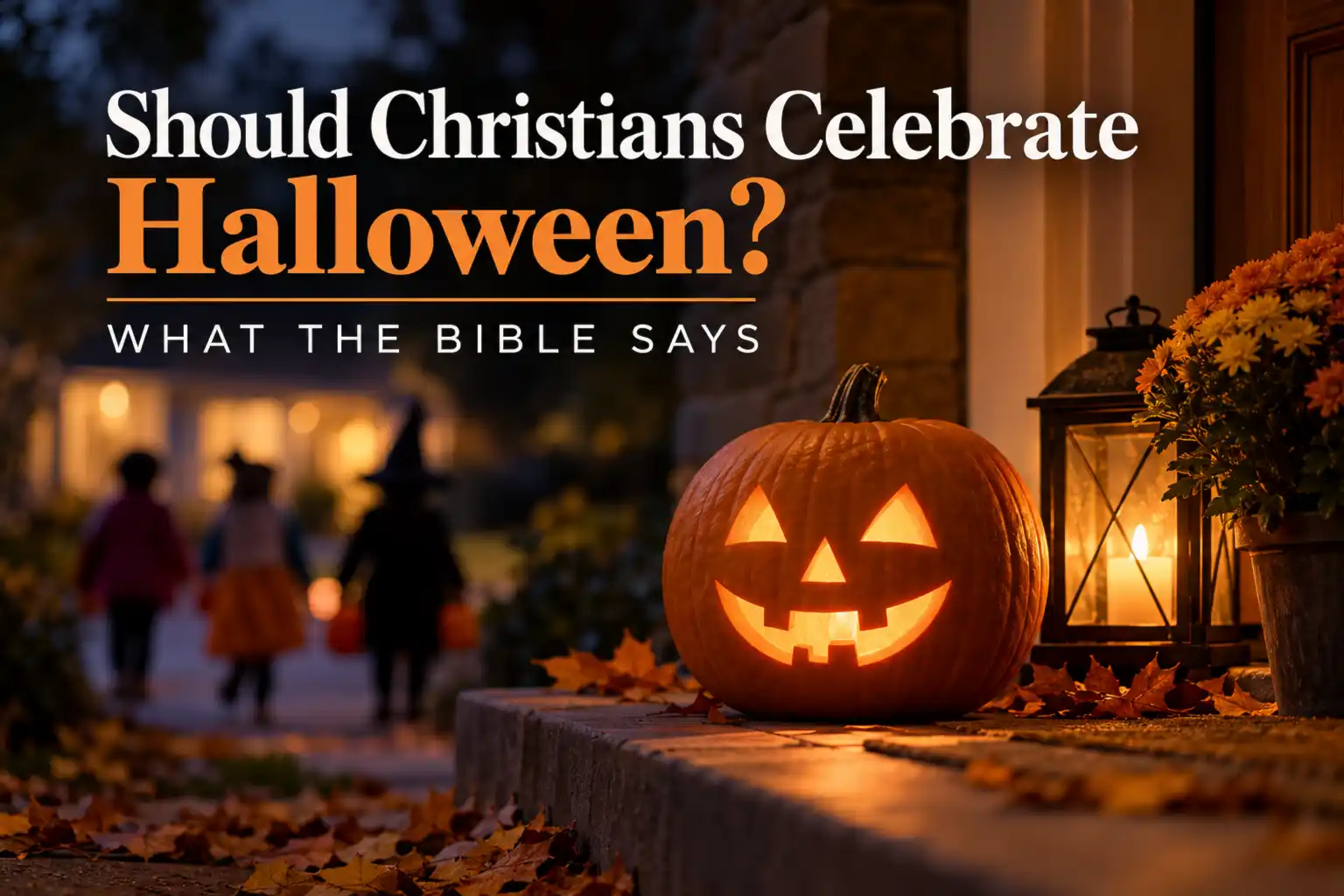
Should Christians Celebrate Halloween? What the Bible Says
Every October, Christians begin asking the same question:
Should Christians celebrate Halloween?
For some believers, the answer is an immediate no. They associate Halloween with witches, demons, ghosts, death, and occult practices and want nothing to do with it.
Other Christians see Halloween very differently. To them, dressing their children as a princess or superhero, carving a pumpkin, and going door to door for candy has nothing to do with worshiping evil.
So who is right?
The Bible never mentions Halloween by name. That means we cannot point to a verse that specifically says Christians must celebrate it—or that Christians must avoid every activity associated with October 31.
But Scripture gives us clear principles about the occult, darkness, Christian freedom, conscience, discernment, influence, and glorifying God.
Those principles can help Christians make a wise decision.
The Short Answer: Should Christians Celebrate Halloween?
There is an important distinction we need to make.
Christians should never participate in witchcraft, divination, attempts to communicate with the dead, occult rituals, or other practices Scripture directly condemns.
The Bible is clear about those things.
But attending a fall festival, handing out candy, carving a pumpkin, or allowing a child to dress as a firefighter is not automatically the same thing as participating in the occult.
That is why the better question may not simply be:
“Is Halloween sinful?”
Instead, Christians should ask:
“What exactly am I participating in, what am I celebrating, and can I do this with a clear conscience before God?”
For some Christians, answering those questions will lead them to completely avoid Halloween.
For others, it may mean participating in certain innocent activities while drawing firm boundaries around anything connected to the occult, glorification of evil, or spiritual darkness.
Let’s look at what Scripture says.
Where Did Halloween Come From?

Halloween has a complicated history, and Christians should be careful about repeating oversimplified claims about its origins.
Modern Halloween developed from a mixture of traditions.
One influence was Samhain, an ancient Celtic seasonal observance associated with the transition from summer into winter and beliefs concerning the boundary between the living and the dead.
Christian observances also became connected to this time of year.
November 1 became associated with All Saints’ Day, also called All Hallows’ Day, while the preceding evening became known as All Hallows’ Eve—which eventually became the word Halloween.
Over centuries, Christian and pre-Christian customs mingled and changed.
Halloween changed even further as it developed in North America.
For many people today, Halloween functions primarily as a secular cultural holiday centered around costumes, pumpkins, neighborhood activities, parties, decorations, and candy.
That does not mean its historical associations or modern fascination with witches, ghosts, death, and the occult should simply be ignored.
But neither is it historically accurate to reduce everything about modern Halloween to one ancient pagan ritual.
For Christians, the most important question is ultimately not:
“Where did every Halloween tradition originate?”
The more important question is:
“What am I participating in today, and does it honor God?”
The Bible Clearly Forbids Occult Practices
There are some areas where Scripture leaves very little room for uncertainty.
God repeatedly warns His people to stay away from occult practices.
Deuteronomy 18:10–12 condemns practices including divination, sorcery, interpreting omens, casting spells, consulting mediums or spiritists, and attempting to inquire of the dead.
The New Testament gives us another striking example.
In Acts 19:18–19, people who had come to faith in Christ and previously practiced magic brought their books or scrolls together and publicly burned them.
Their response to following Jesus was not to continue their former occult practices while simply adding Christianity to them.
They left those practices behind.
That means Christians should stay away from practices such as:
- Divination
- Séances
- Attempts to communicate with the dead
- Spirit boards or Ouija boards used for attempted spirit communication
- Spell casting
- Witchcraft as an actual spiritual practice
- Consulting mediums
- Attempting to summon spirits
- Occult rituals
Halloween does not make something acceptable that Scripture otherwise condemns.
If an activity is sinful on November 1, it does not suddenly become harmless because it happens on October 31.
Turning away from practices God calls sinful is part of biblical repentance. If you’d like to explore that more deeply, read What Is Repentance? Biblical Meaning, Examples, and How to Repent.
Christians Are Called to Walk in the Light
Ephesians 5:8 tells believers that they are now light in the Lord and should live as children of light.
Then Ephesians 5:11 warns believers against participating in the fruitless works of darkness.
That should cause Christians to think carefully about entertainment or activities that deliberately glorify evil.
There is a meaningful difference between a child dressing as a dinosaur and intentionally celebrating demons, Satan, witchcraft, violence, or the occult.
Christians should not become so casual about darkness that things God calls evil become attractive to us.
Philippians 4:8 also encourages believers to direct their minds toward what is true, honorable, right, pure, lovely, admirable, excellent, and worthy of praise.
That does not mean Christians can never read or watch a story that contains evil. The Bible itself contains accounts of murder, warfare, demonic activity, wicked rulers, and terrible human sin.
The issue is not merely whether evil appears somewhere.
The question is how it is being presented and what effect it is having on us.
Are we recognizing evil as evil?
Or are we learning to admire it, desire it, celebrate it, or become fascinated with it?
Those are very different things.
For more on biblical spiritual discernment, you can also read Fight Satan’s Attacks: Winning the Spiritual Battle.
Is Trick-or-Treating a Sin?
The Bible does not specifically address trick-or-treating.
There is nothing inherently sinful about a child receiving candy from neighbors.
The real question is what surrounds the activity.
Imagine two families.
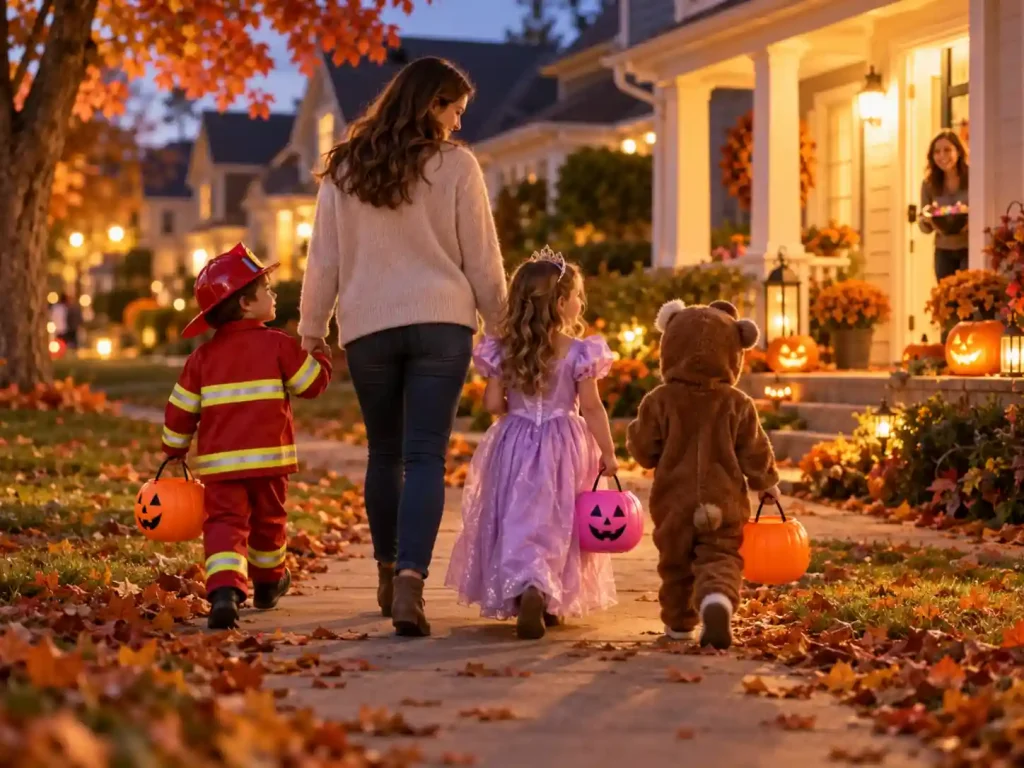
One family allows its children to dress as a firefighter and a princess. They walk around the neighborhood, greet neighbors, collect candy, come home, and go to bed.
Another group spends the evening attempting to communicate with spirits.
Those activities may occur on the same night.
Biblically, they are clearly not the same thing.
We should therefore be careful about declaring something sinful merely because it happens on October 31.
At the same time, Christians shouldn’t ignore legitimate concerns simply because much of modern Halloween is treated as harmless fun.
Discernment requires examining what we are actually doing.
What About Halloween Costumes?
The Bible does not provide Christians with a list of approved Halloween costumes.
This is an area requiring wisdom.
A firefighter, princess, animal, astronaut, athlete, Bible character, or fictional hero is very different from deliberately portraying Satan, a demon, or something designed to celebrate the occult.
Parents may also want to consider costumes that are excessively violent, frightening, or sexualized.
A helpful question is:
What am I encouraging my child to admire or imitate?
Costumes may seem insignificant, but children learn from what adults treat as funny, exciting, admirable, or harmless.
Christian parents don’t need to become fearful of everything.
But we should still be intentional about what we normalize.
What About Our Children?
Parents should consider something beyond the question:
“Is this technically permissible?”
We should also ask:
“What is my child learning from this?”
Adults may understand the difference between fictional entertainment, make-believe, and genuine occult practices.
Young children may not always make those distinctions as clearly.
That does not mean every picture of a cartoon ghost will spiritually harm a child.
Nor does it mean Christian parents need to make children terrified of Halloween.
It does mean parents should use wisdom.
A family might decide that innocent costumes and trick-or-treating are acceptable while avoiding occult activities, extremely frightening attractions, demonic imagery, or entertainment that makes evil appealing.
Another family may decide it is better for their children not to participate at all.
Parents know their children.
Some children are barely bothered by scary imagery.
Others can become anxious, frightened, or preoccupied with it.
The goal should not be fear.
The goal should be biblical discernment.
Parents can use these conversations to teach children an important lesson:
Not everything imaginary is real, but spiritual evil is not something Christians should seek, celebrate, or imitate.
What About Ghosts, Witches, Demons, and Haunted Attractions?
This is an area where Christians need serious biblical discernment.
Scripture presents spiritual evil as real. Ephesians 6:12 teaches that our struggle is not merely against flesh and blood but also involves spiritual forces of evil.
Because of that, Christians should never treat genuine occult practices as harmless entertainment.
At the same time, we should avoid assuming that every fictional ghost, witch, demon, or supernatural element automatically promotes the occult.
A better question is:
What is this story actually saying about the darkness it portrays?
Depicting Evil Is Not the Same as Celebrating Evil
Stories have always used villains, danger, temptation, darkness, and evil to communicate larger truths.
A fictional story may include a witch, ghost, demon, or other dark character without presenting that character as good.
Sometimes those figures are used to represent deception, temptation, fear, rebellion, destruction, or evil.
That is very different from a story that treats occult practices, spiritual darkness, or evil as attractive, desirable, harmless, or something worth pursuing.
For example, Christian author C. S. Lewis included witches, magic, mythical creatures, and frightening evil in The Chronicles of Narnia. But the White Witch is not presented as good. She represents cruelty, deception, domination, and death, while Aslan and his kingdom represent goodness, sacrifice, truth, and life.
Christian novelist Frank Peretti’s This Present Darkness also includes fictional portrayals of angels and demons. The supernatural elements are used to dramatize spiritual warfare, the reality of evil, and the importance of prayer—not to encourage occult practices.
Other Christian fiction writers have also used suspense, fantasy, frightening situations, and the struggle between light and darkness to explore themes of faith, truth, redemption, sacrifice, and the battle between good and evil.
So when evaluating a fictional story, don’t stop at:
“Does it contain a witch, ghost, demon, or supernatural element?”
Go deeper.
Ask:
What does the story ultimately call good?
What does it call evil?
What kind of behavior is being praised or condemned?
Does darkness lead toward deception, destruction, fear, bondage, or rebellion?
Or is darkness being treated as attractive, harmless, desirable, or something worth pursuing?
Does the story expose evil, or does it normalize it?
What effect is this having on my own heart or on my children?
That distinction matters.
The Bible itself describes demons, false prophets, mediums, sorcery, murder, idolatry, and terrible acts of evil.
Their presence in Scripture does not mean Scripture approves of them.
They are presented within a moral framework that shows us what God calls good and what He calls evil.
Christians can use a similar principle when evaluating fiction.
But Haunted Houses Are Different
This is where I believe haunted attractions cross a different line.
I do not believe haunted houses are something Christians should participate in.
Whether an attraction claims to be connected with an allegedly haunted location or is completely staged, its purpose is generally not to tell a redemptive story in which darkness is exposed as evil.
The experience itself is usually built around entering darkness for entertainment.
Fear, death, disturbing imagery, ghosts, demons, occult themes, violence, torment, and horror often become the attraction.
Ephesians 5:11 tells believers:
“Have nothing to do with the fruitless deeds of darkness, but rather expose them.”
As followers of Christ, we are called to walk as children of light.
For that reason, I don’t believe the question should simply be:
“But is the haunted house real?”
Even if every ghost, demon, and supernatural element is pretend, we are still deliberately entering an environment designed to make darkness part of the entertainment.
There is a difference between a story depicting darkness in order to expose it and choosing darkness itself as the experience we are seeking for amusement.
There is also a difference between not being afraid of darkness and choosing to entertain ourselves with it.
Christians are called to be set apart.
That doesn’t mean we should live frightened of demons, ghosts, or October 31. Jesus Christ has authority over the powers of darkness.
But we also don’t need to deliberately immerse ourselves in environments centered on things Scripture tells us to reject.
So while I would not automatically condemn a book, movie, or children’s story merely because it contains a fictional witch, ghost, or other supernatural character, I believe we should examine what that story is actually promoting.
With haunted houses, my conviction is different.
I believe Christians should stay away from them and choose entertainment that does not make darkness, terror, death, demons, or the occult the attraction itself.
We do not need to see how close we can get to darkness while still calling it harmless.
We have been called to walk in the light.
Romans 14 and Matters of Christian Conscience
Romans 14 is extremely helpful when Christians disagree about issues that Scripture does not directly address.
It is important to be precise here:
Romans 14 is not about Halloween.
Paul was discussing disagreements among believers involving food and the observance of particular days.
But the chapter gives Christians valuable principles for handling matters of conscience where God has not given a direct command.
Romans 14 teaches believers not to treat one another with contempt over such disagreements and tells each person to be fully convinced in his or her own mind.
Later in the chapter, Paul warns against acting against one’s conscience.
Applied carefully, those principles can help us think about Halloween.
If you sincerely believe participating would be wrong and your conscience is troubled about it, don’t participate simply because other Christians do.
You don’t have to celebrate Halloween.
You don’t need to send your children trick-or-treating.
You don’t need to decorate your home.
You are free to abstain.
At the same time, Christians should be cautious about accusing another believer of sin merely because that family allows a child to wear an innocent costume and collect candy.
Scripture clearly defines some activities as sinful.
Other decisions require wisdom and conscience.
Those categories should not be confused.
Our article Are Christians Supposed to Judge? What the Bible Really Says About Judging Others goes deeper into the difference between biblical discernment and turning personal convictions into judgments against other people.
Don’t Turn Personal Convictions Into God’s Commands
This is important.
Sometimes you may become personally convinced that you should not participate in something.
You should take that conviction seriously.
But there is a difference between saying:
“I believe I should not do this.”
and:
“The Bible says every Christian who does this is sinning.”
The second statement requires biblical support.
Scripture—not our personal preference—is the final authority.
If Scripture clearly calls something sinful, Christians do not have the freedom to redefine it.
But where Scripture does not give a direct prohibition, we must be careful about creating commandments God did not give.
My Personal Conviction About Halloween
I also want to share where I personally land on this issue.
After thinking and praying about it, I have decided not to participate in Halloween.
For me, that decision comes down to personal conviction. I do not want to intentionally involve myself in anything that has even a hint of spiritual darkness attached to it.
Because Halloween is so closely associated with things like witches, ghosts, demons, death, and the occult, I personally feel more comfortable stepping away from it altogether.
That is the conviction I believe I need to follow.
At the same time, I do not believe that means every Christian who makes a different decision is automatically sinning.
For example, I do not personally believe a parent is necessarily sinning because they allow their child to dress as a princess, firefighter, or superhero and go trick-or-treating for candy.
That is different from deliberately participating in witchcraft, divination, spirit communication, or other practices Scripture clearly condemns.
So while my own decision is to stay away from Halloween, I do not want to take my personal conviction and turn it into a command the Bible itself does not make.
For me, the safest and most peaceful choice is simply not to participate.
Another Christian may prayerfully reach a different conclusion about certain innocent activities.
That is where grace, discernment, and conscience matter.
I believe Christians should take darkness seriously.
I also believe we should be careful not to call something sin when Scripture itself does not clearly call it sin.
So my personal position is simple:
I choose not to participate in Halloween because I want to stay as far away from darkness as I can. But I do not believe that every Christian who allows innocent trick-or-treating is therefore living in sin.
That is a distinction I think matters.
Christian Freedom Doesn’t Mean “Anything Goes”
There is another side to this issue.
Sometimes Christian freedom is treated as though it means:
“The Bible doesn’t specifically forbid this, so I can do whatever I want.”
That is not a complete biblical picture of freedom.
First Corinthians 10:23 teaches that something can be permissible without necessarily being beneficial or constructive.
Then 1 Corinthians 10:31 gives Christians an important standard for daily life:
Whatever we do should be done for God’s glory.
That gives us a better question than merely:
“Am I allowed to do this?”
We can also ask:
“Is this wise?”
“Is this beneficial?”
“What is this doing to my heart?”
“Can I honestly do this for the glory of God?”
Those questions apply to far more than Halloween.
Our Freedom Should Also Consider Other Believers
Christian liberty is not only about what I am comfortable doing.
First Corinthians 8:9 warns believers to be careful that exercising their freedom does not become a stumbling block to someone with a weaker or more vulnerable conscience.
That does not mean Christians must live according to every opinion another person has.
But love should make us considerate.
If you know another Christian has a painful or spiritually dangerous history with something, don’t pressure them to participate just because you believe you can.
Likewise, someone who abstains should not automatically assume that everyone who makes a different decision has compromised their faith.
Christian freedom should be practiced with both truth and love.
What About Christians Who Previously Practiced Witchcraft or the Occult?
This deserves special consideration.
Halloween imagery or activities may affect some believers very differently because of their past.
A person who previously practiced witchcraft, divination, spirit communication, or other occult practices may decide that participating in Halloween brings back associations, temptations, memories, or interests they believe they need to leave behind.
For that believer, avoiding Halloween entirely may be a wise boundary.
Another Christian should not respond:
“It’s harmless. You’re overreacting.”
We do not know everything another believer has walked through.
If something threatens another person’s conscience or draws them toward a past sinful practice, love should matter more than proving that we have the freedom to participate.
A Halloween Decision Checklist for Christian Families
If your family is uncertain about what to do, prayerfully work through these questions:
- Does this activity involve something Scripture directly condemns?
- Are we enjoying something innocent, or are we glorifying evil?
- Can I participate with a clear conscience before God?
- Can I honestly thank God while participating?
- Could this encourage an unhealthy fascination with the occult or spiritual darkness?
- What is this teaching my children?
- Is this frightening or negatively affecting one of my children?
- Am I participating because I believe it is harmless, or because I am afraid of being different?
- Am I abstaining because of biblical conviction, or because of fear and superstition?
- Am I treating my personal conviction as though it were a direct command from Scripture?
- Could exercising my freedom negatively affect another believer?
- Is this activity beneficial to my walk with Christ?
- Can I do this for the glory of God?
Those questions are useful far beyond Halloween.
They teach us how to think biblically about culture.
Common Questions Christians Ask About Halloween
Can Christians Carve Pumpkins?
There is no biblical prohibition against carving a pumpkin.
A pumpkin is part of God’s creation, and decorating one does not automatically carry spiritual significance.
A family might carve smiling faces, fall scenes, Scripture references, crosses, leaves, or simply traditional jack-o’-lantern designs.
What matters is not the vegetable.
The question is what we are intentionally celebrating or participating in.
Can Christians Hand Out Halloween Candy?
Yes, handing someone candy is not inherently sinful.
In fact, some Christian families who do not otherwise participate in Halloween intentionally stay home and hand out candy because it gives them an opportunity to greet neighbors they may rarely see.
Some include an encouraging card or church invitation.
Others simply use it as an opportunity to be kind and hospitable.
Can Christian Children Go Trick-or-Treating?
The Bible does not directly forbid children from trick-or-treating.
Parents must decide whether the activity is appropriate for their family and what boundaries they want to establish.
A family may allow trick-or-treating while choosing innocent costumes and avoiding frightening or occult-themed activities.
Another family may choose not to participate.
Both decisions can be made sincerely before God.
Can Christians Dress Up for Halloween?
Wearing a costume is not inherently sinful.
The character or message being celebrated may be another matter.
Christians should exercise the same discernment they would use with clothing, entertainment, or media at any other time of year.
Is It Wrong for Christians to Decorate for Halloween?
Not every Halloween decoration carries the same meaning.
Pumpkins, autumn leaves, scarecrows, hay bales, or playful decorations are not equivalent to celebrating the occult.
But Christians may reasonably choose not to decorate their homes with imagery that glorifies demons, Satan, witchcraft, extreme violence, or death.
Again, discernment is more helpful than making sweeping rules Scripture does not make.
What About Witches in Movies or Children’s Cartoons?
Fictional depictions of magic or witches are not automatically equivalent to practicing actual witchcraft.
Scripture contains supernatural events and descriptions of evil without encouraging people to imitate them.
The better questions are:
What is the story teaching?
How is evil being portrayed?
What effect is this having on me or my children?
And is it awakening curiosity about actual occult practices?
Those questions require parental wisdom rather than a universal rule about every fictional story.
What If My Family Chooses Not to Celebrate Halloween?
That is a completely reasonable decision.
You don’t owe the culture participation in every holiday.
Some Christian families simply treat October 31 like any other evening.
Others choose an alternative activity.
Your family could:
- Have a family game night.
- Bake fall treats together.
- Decorate pumpkins.
- Watch a family movie.
- Attend a church fall festival.
- Invite friends over for dinner.
- Have a backyard bonfire.
- Organize a neighborhood cookout.
- Create a Scripture scavenger hunt for younger children.
- Make care packages for someone in need.
- Hand out candy and meet neighbors.
- Use the evening as an opportunity for hospitality.
The purpose is not necessarily to invent a substitute “Christian Halloween.”
It’s simply to enjoy time together while honoring your family’s convictions.
What If My Family Does Participate?
Then establish boundaries before the night arrives.
A Christian family might decide:
“We’re comfortable with costumes, pumpkins, and candy, but we’re staying away from occult practices and demonic themes.”
Another family might attend only a community or church fall event.
Another may decide to participate in neighborhood trick-or-treating but skip haunted attractions.
There is value in deciding your boundaries ahead of time rather than changing them according to whatever your children encounter that evening.
Parents should lead intentionally.
Should Churches Hold Trunk-or-Treat Events?
Many churches hold fall festivals or trunk-or-treat events around Halloween.
There is nothing inherently unbiblical about churches giving children candy, playing games, sharing food, or providing a community gathering.
Such events can also give churches an opportunity to meet families from the surrounding neighborhood.
But churches should still consider what message they present.
If the purpose is outreach, fellowship, and serving families, a church does not need to imitate everything about secular Halloween culture to accomplish that purpose.
Christians can engage their communities without glorifying the things Scripture tells us to reject.
Don’t Practice Discernment Only on October 31
There is another issue Christians should consider.
It is possible to become extremely concerned about darkness on one night of the year while ignoring what enters our homes during the rest of the year.
We can argue passionately about Halloween while paying little attention to:
- What we regularly watch.
- What our children watch.
- The music shaping our thinking.
- The social media accounts influencing us.
- The games we consume.
- The attitudes we celebrate.
- The entertainment we allow to fill our minds.
Biblical discernment isn’t seasonal.
If we’re deeply concerned about darkness on October 31 but willingly fill our minds with it during the other 364 days, we may be missing the larger issue.
Following Jesus involves examining our influences throughout the year.
Halloween can actually become an opportunity to ask a bigger question:
What am I allowing to shape my heart every day?
For more practical guidance about following Christ in everyday life, visit our Christian Living section.
Christians Should Not Be Ruled by Fear

There is another extreme we need to avoid.
Some Christians become so concerned about Halloween that fear begins controlling them.
Christians should take spiritual warfare seriously.
Ephesians 6 makes that clear.
But spiritual awareness is not the same thing as superstition.
October 31 is not a day when Jesus somehow loses His authority.
Colossians 2:15 describes Christ’s triumph over spiritual rulers and authorities, and 1 John 4:4 reminds believers that the One in them is greater than the one in the world.
Christians therefore do not need to respond to Halloween with panic.
Our response to darkness should be neither fascination nor fear.
It should be faithfulness to Christ.
If fear, spiritual warfare, or discerning the enemy’s tactics is an area you want to understand more deeply, our Spiritual Warfare resources can help you study what Scripture teaches.
Christians Can Disagree About Halloween Without Attacking Each Other
Unfortunately, conversations about Halloween can become surprisingly hostile among Christians.
One believer says:
“Any Christian who participates in Halloween is compromising with Satan.”
Another replies:
“Anyone who avoids Halloween is legalistic.”
Neither response leaves much room for careful biblical discernment.
There are activities Scripture clearly condemns.
We should call those things what Scripture calls them.
There are also areas where Scripture does not give a direct command, and Christians may reach different conclusions after examining biblical principles.
We should not erase either category.
Christians who abstain should do so sincerely before the Lord.
Christians who participate in innocent activities should still examine those choices before the Lord.
And both should remain willing to have their thinking corrected by Scripture.
So, Should Christians Celebrate Halloween?
There is not one sentence that answers every possible Halloween activity.
Christians should not participate in witchcraft, divination, attempts to communicate with spirits or the dead, occult rituals, or other practices Scripture directly condemns.
That boundary is clear.
But Scripture does not say that putting a pumpkin on the porch, handing a neighbor candy, attending a fall festival, or wearing an innocent costume is automatically sinful.
Those decisions require wisdom, prayer, discernment, and conscience.
You may decide:
“Our family wants nothing to do with Halloween.”
You are free to make that choice.
Another Christian family may decide:
“We’ll allow costumes and trick-or-treating, but we won’t participate in occult practices or glorify darkness.”
They must make that decision before God.
Whatever we decide, our standard shouldn’t simply be:
“What is everyone else doing?”
Nor should it be:
“How close can I get to something questionable without technically sinning?”
A better question is:
“What choice will help me faithfully follow Jesus?”
First Corinthians 10:31 gives believers a principle broad enough to cover October 31 and every other day:
Whatever we do, we should do it for the glory of God.
Final Thoughts
Christians do not need to be afraid of Halloween.
But neither should we become careless about things Scripture treats seriously.
Stay away from actual occult practices.
Don’t glorify evil.
Teach your children discernment without teaching them superstition.
Listen to your conscience.
Don’t pressure another believer to violate theirs.
Don’t turn personal convictions into commands God never gave.
Don’t use Christian freedom as an excuse to ignore wisdom.
And don’t limit spiritual discernment to one evening in October.
Above all, keep your attention on Jesus.
Christianity is ultimately not about keeping a perfect list of cultural activities we can and cannot participate in.
It is about belonging to Jesus Christ, trusting what He has done for us, and learning to follow Him.
If you’re unsure what the Christian gospel actually is or what it means to put your faith in Jesus, start with What Is the Gospel?.
Whether your family stays home, attends a fall festival, goes trick-or-treating, hands out candy, or simply treats October 31 like any other evening, the goal remains the same:
Walk in the light and glorify God in whatever you do.