
A Biblical Response to the Minneapolis ICE Shooting: Compassion, Law, and the Sanctity of Life
Recent events surrounding immigration enforcement and the protests that followed have stirred deep emotions across the country. A woman is dead. A family is grieving. A law enforcement officer made a split-second decision under threat. Communities are divided, and many Christians are asking how we should think, speak, and respond.
As followers of Christ, we cannot afford shallow answers. Scripture calls us to truth, wisdom, and love – not one at the expense of the others.
This is not a call to political allegiance. It is a call to biblical clarity.
Every Human Life Bears God’s Image
The Bible begins with a truth that must never be minimized.
“So God created man in his own image, in the image of God he created him.”
Genesis 1:27
Every human life has value because it is created by God. That includes citizens and non-citizens, law enforcement officers and civilians, victims and those accused of wrongdoing.
When a life is lost, Christians should mourn. We should resist the temptation to turn death into a talking point or a weapon for our arguments.
“Rejoice with those who rejoice, weep with those who weep.”
Romans 12:15
Grief is appropriate. Compassion is required.
But compassion does not mean abandoning truth.
The Bible Does Not Teach Open Borders Without Discernment
Scripture speaks often about caring for the foreigner and the stranger. This reflects God’s heart for mercy and kindness.
“The stranger who sojourns with you shall be to you as the native among you, and you shall love him as yourself.”
Leviticus 19:34
Yet Scripture never teaches reckless openness without wisdom or boundaries.
God repeatedly instructed Israel to establish gates, watchmen, and laws to protect the community. Cities were not left unguarded. Homes were not left open to anyone without discernment.
“The prudent sees danger and hides himself, but the simple go on and suffer for it.”
Proverbs 22:3
Love does not cancel discernment. Wisdom is not the enemy of compassion.
Most people would not allow unknown individuals to move into their home without understanding who they are, their background, or whether they pose a danger to their family. That instinct is not unloving. It is responsible.
The same principle applies to a nation. Borders, background checks, and immigration laws exist not because people hate foreigners, but because governments have a God-given responsibility to protect those under their care.
Romans 13 and the Christian Duty to Respect Lawful Authority
One of the clearest passages in Scripture on this issue is often ignored or selectively applied.
“Let every person be subject to the governing authorities. For there is no authority except from God.”
Romans 13:1
According to Scripture:
- Government exists by God’s design
- Law enforcement is intended to restrain evil and protect the innocent
- Obedience to law is not optional for believers
“For rulers are not a terror to good conduct, but to bad.”
Romans 13:3
This does not mean authorities are always right or beyond accountability. Scripture also condemns abuse of power. But Christians should not automatically assume that enforcement of law is immoral simply because it involves force or authority.
Immigration laws are still laws. Violating them is not morally neutral, even when emotions are involved.
Recognizing Evil Without Losing Compassion
Scripture does not deny the existence of real evil in the world.
“Your adversary the devil prowls around like a roaring lion, seeking someone to devour.”
1 Peter 5:8
Not every person crossing a border is dangerous. Many are seeking safety, opportunity, or a better life.
But some are not.
Some individuals who cross borders unlawfully have violent histories. Some engage in trafficking, exploitation, or criminal activity. Acknowledging this reality is not hateful. It is honest.
Biblical compassion does not require pretending danger does not exist. In fact, ignoring evil is itself unloving, because it puts innocent people at risk.
A Tragic Death and the Reality of Split-Second Decisions
The recent shooting involving an immigration enforcement officer has raised serious questions and strong reactions. A woman lost her life. That is tragic. Her family deserves compassion and prayer.
At the same time, it is important to acknowledge the full context of the encounter.
According to federal statements, the officer involved was injured during the incident and required hospital treatment. Authorities have reported that he suffered internal injuries to his torso after being struck by the vehicle and was transported to a hospital for medical care before later being released.
When a vehicle is used in a way that threatens life, even at low speed, it can constitute deadly force. Law enforcement officers are trained to recognize this threat and to respond immediately to protect their own lives and the lives of others nearby. These decisions are made in seconds, not with the benefit of hindsight.
Scripture recognizes the role of authority in restraining lethal violence.
“For he is the servant of God, an avenger who carries out God’s wrath on the wrongdoer.”
Romans 13:4
This does not settle every detail of what happened. Investigations matter. Truth matters. Accountability matters.
But Christians should be cautious about declaring moral judgments before facts are known or assuming malicious intent where fear and danger may have been present.
Additional Context That Matters
It is also relevant to note that this was not the first time this officer had been injured by a vehicle during law enforcement duties.
Public reporting has confirmed that months prior to this incident, the same officer was run over and dragged by a suspect’s vehicle during a separate enforcement encounter. That earlier incident resulted in injuries and required medical treatment.
This history does not excuse outcomes we wish had never occurred. But it does help explain how past trauma and real-world danger shape how threats are perceived in the field.
“The one who states his case first seems right, until the other comes and examines him.”
Proverbs 18:17
As Christians, we are called to seek full truth, not partial narratives that reinforce our assumptions or preferred conclusions.
Holding Truth and Mercy Together
Christians are not called to choose between compassion and law.
We are called to uphold both.
We can mourn a death while affirming the necessity of borders.
We can care about immigrants while supporting background checks.
We can pray for grieving families while respecting lawful authority.
Love without truth becomes sentimentality.
Law without mercy becomes cruelty.
Scripture calls us to neither extreme.
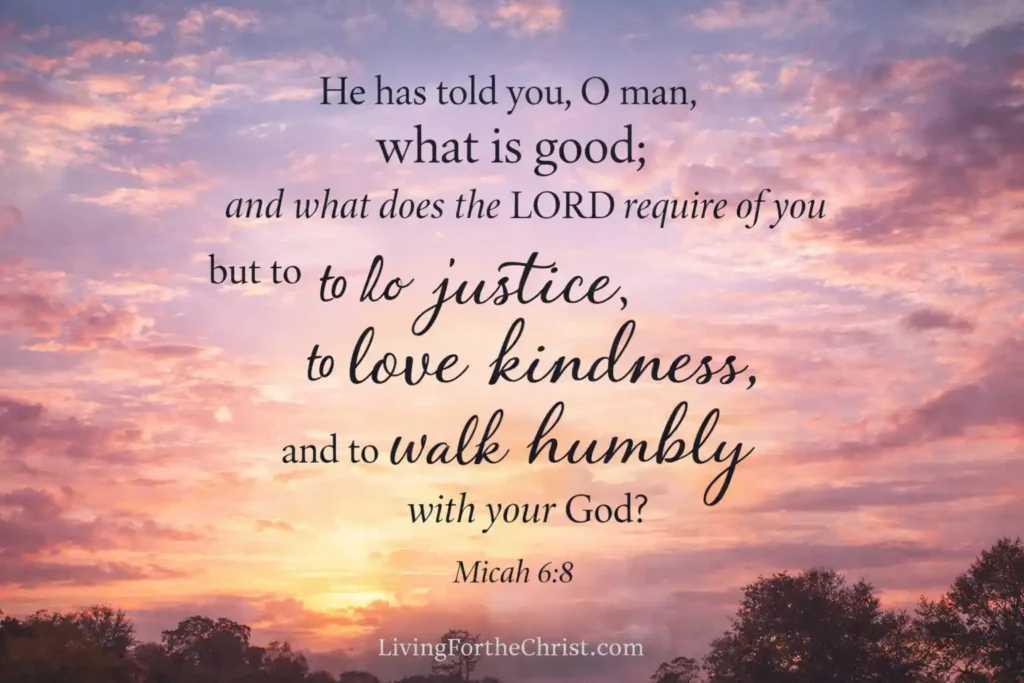
“He has told you, O man, what is good; and what does the Lord require of you but to do justice, and to love kindness, and to walk humbly with your God?”
Micah 6:8
Reflection Questions
Use these for personal prayer, journaling, or small-group discussion:
- When I hear about tragic events in the news, do I first seek God’s truth or my own assumptions?
- How do I personally balance compassion for those who suffer with respect for laws and authority?
- Are there areas where my views are shaped more by media or social pressure than by Scripture?
- What does it look like for me to be a peacemaker in conversations that are emotionally charged?
- How can I pray more intentionally for both grieving families and those who serve in dangerous roles?
A Prayer for Our Time
Lord,
We grieve the loss of life and the pain of divided communities.
We ask for comfort for grieving families and wisdom for those in authority.
Protect the innocent. Expose what is false. Restrain what is evil.
Teach us to love without naivety and to speak truth without hardness.
Help us walk humbly before You in a world full of noise and confusion.
Amen.
Editor’s Disclaimer
This article is written to reflect biblical principles and pastoral reflection, not to serve as a legal, political, or investigative account of ongoing events. Information surrounding this incident continues to develop, and readers are encouraged to seek primary sources and official updates as investigations proceed. The purpose of this post is to guide Christian thought and conduct through Scripture, prayer, and humility.


There are a few things you don’t address. The church is trans-national Transcending all earthly boundaries, geographical, and political. Galatians 3:28. Jesus came to break down walls. Respect for borders and authorities, is limited by our allegiance to Jesus as Lord, who is above all earthly authority. It is important to remember that the legitimate authorities crucified the Lord of Life. That fact, alone must give us a deep distrust of politics and the pursuit of power the command to love our neighbor is absolute the commands to obey authorities is qualified.
Thank you for taking the time to engage thoughtfully. You raise important biblical truths, and I appreciate the spirit in which you’re reminding us of Christ’s ultimate authority.
I fully agree that the Church is trans-national and that our primary allegiance is to Jesus Christ as Lord. Galatians 3:28 powerfully reminds us that in Christ, our identity is not defined by ethnicity, nationality, or social status. The gospel does break down the wall of hostility between people, and no earthly border can limit the reach of Christ’s kingdom.
Where I would gently clarify is that Scripture presents these truths as held in tension, not in opposition.
Jesus is above all earthly authority, and there are moments when obedience to God requires civil disobedience (Acts 5:29). At the same time, the same New Testament that proclaims Christ’s supremacy also repeatedly affirms that governing authorities exist by God’s allowance and are meant to restrain evil and protect life (Romans 13, 1 Peter 2).
You’re absolutely right that the legitimate authorities of their day crucified the Lord of Life. That reality should make Christians deeply cautious about power, politics, and blind allegiance to the state. It should also remind us that authority can be abused and must be held accountable. Scripture never calls believers to uncritical trust in government.
At the same time, the misuse of authority does not nullify the existence of authority altogether. Scripture consistently distinguishes between the abuse of power and the purpose of lawful order. The command to love our neighbor is indeed absolute, but love in Scripture is not detached from truth, wisdom, or responsibility. Loving our neighbor includes protecting the vulnerable, preventing harm, and acknowledging the reality of evil in a fallen world.
So I agree with you that obedience to authorities is qualified, not absolute. Where I differ slightly is that I do not believe Scripture presents respect for law, borders, or order as inherently opposed to Christ’s kingdom. Rather, they are part of the broken but necessary structures God uses in the present age, until Christ fully restores all things.
My aim in the post was not to elevate the state above Christ, but to resist a false binary that forces Christians to choose between compassion and order, mercy and law, love and discernment. Scripture consistently calls us to hold those together, even when the tension is uncomfortable.
I appreciate your comment, and I’m grateful for the reminder that our ultimate hope and loyalty is never in governments, policies, or power, but in Christ alone, the true King whose kingdom cannot be shaken.